
Biohacking. I’d heard the term once or twice in medical school, though it never held much weight for me at the time.
That changed on a flight home from holiday last year when I got talking to a man who swore by it. He asked me, as a doctor, what I thought of biohacking. Embarrassingly, I had to admit I didn’t know enough to say. He smiled, told me it had transformed his life, and left me intrigued.
Cue late-night Google deep dives, “doom-scrolling” through endless claims and counterclaims, and documentaries like Don’t Die: The Man Who Wants to Live Forever – all leaving me unsure how to feel. A year and a half later, I’ve still got more questions than answers.
So, what is biohacking really – a revolution in health, or simply a cleverly marketed wellness fad?
DISCLAIMER:
While I am a practising doctor, the information on this site is for educational purposes only. It does not take into account your personal circumstances, which can significantly affect medical decision-making and treatment. This content therefore does not constitute medical advice, and should not be relied upon for diagnosis or treatment. Always consult a qualified healthcare provider regarding any health concerns.
This article was written on the 22/09/2025 using up-to-date sources at that time. Please be aware that medical information and guidelines change often.
Biohacking: What Is It, and Why It’s Controversial
“Biohacking”, as defined by the Merriam Webster dictionary, is:
‘Biological experimentation done to improve the qualities or capabilities of living organisms especially by individuals and groups working outside a traditional medical or scientific research environment.’
It’s a broad term encompassing a wide range of practices, from simple lifestyle changes like intermittent fasting – only eating within certain hours each day – to DIY biology labs experimenting with gene editing at home. Some biohacks may have scientific backing, others are still being studied, and many are more hype than evidence.
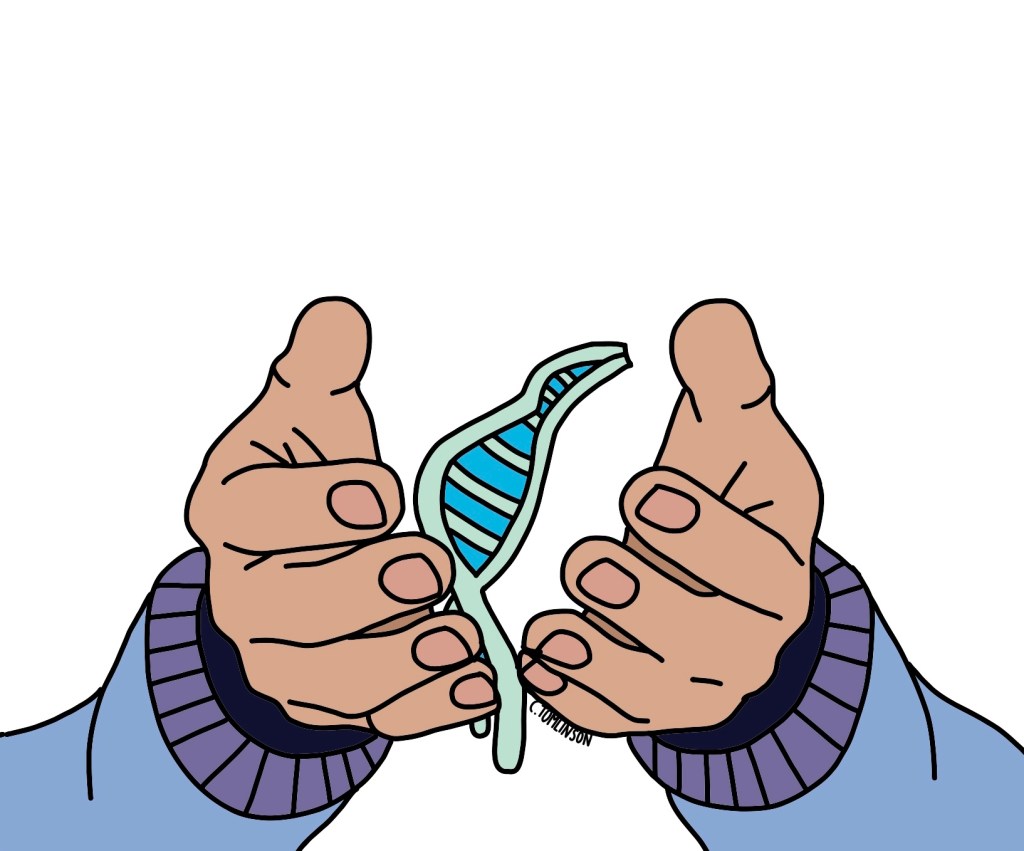
Biohacking is controversial in the medical field.
As Mikhail Kogan, M.D., medical director of the George Washington University Center for Integrative Medicine, puts it:
“It wouldn’t be called ‘biohacking’ if it’s scientifically proven – that would be standard of care.”
In other words, biohacking exists in the grey area between proven medicine and experimentation, which is why it sparks both fascination and skepticism.
Why Is It So Popular, and What Drives People To Do It?
One of the key aims of biohacking is improving healthspan – the number of years that someone lives in good health – as well as lifespan. Many biohackers are drawn to techniques they hope will slow ageing and help them live longer, healthier lives.
But here’s the thing: many of us are already small-scale biohacking without realising it. How many of us track our runs with a Garmin or Apple Watch? Take multivitamins before breakfast? Or meditate to decompress after a busy day?

These simple habits are forms of self-experimentation – ways to monitor and optimise our bodies. In a sense, we’ve been doing it all along; biohacking just puts a name on it.
Health and wellness culture has surged in popularity. People are more health-conscious than ever, and biohacking is an extension of this culture. With technology so accessible, these habits have become commonplace.
Biohacking’s popularity is also amplified by social media. Influencers, celebrities, and even Silicon Valley CEOs share their routines and experiments with millions of followers, creating a sense that “everyone is doing it” – and that we should too.
One quick search on Youtube, for example, pulls up hundreds of videos like these below. They’re hard to avoid for anyone with social media.
But beyond trends and gadgets, there’s a deeper psychological pull. Biohacking taps into optimisation culture: the modern obsession with efficiency, productivity, and performance. To be successful is to constantly improve, succeed, and achieve. This begs the question:
When does optimisation stop being helpful and start becoming obsessive?
Is Biohacking Safe?
Though biohacking exists on a spectrum, even some “simple” biohacks may not be safe for everyone. The lack of regulation and accessibility make it difficult to monitor, adding to the risk.
On the safer end, many “biohacks” are simply enhanced versions of healthy lifestyle choices: good sleep hygiene and sleep optimisation, regular exercise, practicing mindfulness, or adjusting your diet based on how your body responds to certain foods. Many of these may even be familiar recommendations from your own doctor.
Even seemingly simple practices require caution, though. Take intermittent fasting, for example – it should be approached carefully if you’re a diabetic on insulin, pregnant or breastfeeding, or taking medications that affect electrolyte balance, such as the blood pressure tablet Ramipril.
At the other extreme, some biohacks venture into high-risk, experimental territory: DIY genetic experiments, implantable devices, off-label drugs or infusions, and more.
These approaches carry real medical and ethical risks, and their long-term effects are often not known.
Social media and influencer culture can make even risky experiments look aspirational, blurring the line between curiosity and obsession.
Here (left) is a video of famous tech millionaire Bryan Johnson, talking about the time biohacking went wrong for him. Despite this, he is very pro-biohacking, now being known as “the man who wants to liver forever” – read about his story here.
The key takeaway: the safety of biohacking depends on context, intent, and the evidence behind each technique. Curiosity is valuable – but knowing where to draw the line may be the most important biohack of all.
The Dark Side of Biohacking: Ethics, Obsession, and Inequality
Even seemingly safe practices can slip into obsession. Tracking every step, calorie, or sleep cycle, can turn curiosity into compulsion – anxiety instead of wellbeing. Are we genuinely pursuing health, or are we chasing an unreachable ideal of constant growth and improvement?
Self-experimentation can also cross dangerous territory. DIY gene editing or unregulated stem call treatments can raise questions about safety, responsibility, and oversight. Who is ultimately accountable if something goes wrong?
Access is another concern. Many cutting-edge interventions, like personalised supplements, are expensive. This deepens the divide between those who can afford to “optimise” their health and those who cannot, creating yet another form of health inequality.
Underlying all of this is something deeply human: our discomfort with ageing and mortality. Biohacking promises control over our bodies and time, but it cannot erase what makes us innately human; the fact that life is finite. If we devote our lives to endlessly optimising, do we risk missing the point of living?
A Note on Research
Writing this article was not straightforward, hence it perhaps reads more like a commentary on this topic than an educational one. Unlike many areas of health and medicine, reliable scientific sources on biohacking are surprisingly scarce – in part because the term itself is so broad.
Much of what I came across came not from peer-reviewed studies, but from personal anecdotes, social media influencers, or companies marketing their products. That, in itself, speaks volumes.
If most biohacking techniques were backed by strong, consistent evidence, we’d see them reflected in mainstream medical guidelines. This has happened with practices once considered “alternative,” like mindfulness and sleep hygiene.
The fact that the large-scale research is still so limited may be the clearest sign yet of how experimental – and uncertain – this movement really can be.
Final Thoughts
On that flight home, I couldn’t give an answer when asked what I thought of it. A year and a half later, I still don’t have a neat one. And as for whether biohacking is the next thing in health and medicine, or a well-marketed fad? There’s no simple answer for that one, either.
Curiosity about our health is a good thing. It pushes us to make positive changes and to seek support. But curiosity without caution, as with anything we do, can be harmful.
Biohacking, at its core, speaks to something deeply human: our fear of decline, our discomfort with limits, and our longing for more. It offers the promise that, with enough data and discipline, we can bend biology to our will.
But here’s the truth: no amount of optimisation can make us immortal. In trying to hack our way out of being human, we risk overlooking what makes life meaningful in the first place – the fact that it is finite.
Have you ever tried biohacking? Would you? Are we pursuing better health, or simply the illusion of control? I’d love to hear your thoughts – leave a comment below.
 The Health and Healing Narrative
Leave a comment