
Ever pick up your phone to check a notification, only to look up 30 minutes later wondering where the time went?
If that sounds familiar, you’re not alone. That disappearing time isn’t just poor self-control – it’s a habit. By definition, habits are behaviours we repeat regularly, often without even noticing. Some are helpful, others… less so, but they all operate the same way in our brains.
Every January, many of us try to tackle our so-called “bad habits.” We set resolutions like drinking less alcohol, eating more healthily, and exercising more. These are great intentions – but most won’t last beyond the end of the month.
So why is it so hard to stick with new habits, and what actually helps them survive past January 31st? In today’s post, we’ll explore the science of habit formation and share strategies to build habits that truly stick this year.
Contents
DISCLAIMER:
While I am a practising doctor, the information on this site is for educational purposes only. It does not take into account your personal circumstances, which can significantly affect medical decision-making and treatment. This content therefore does not constitute medical advice, and should not be relied upon for diagnosis or treatment. Always consult a qualified healthcare provider regarding any health concerns.
This article was written on the 05/01/2026 using up-to-date sources at that time. Please be aware that medical information and guidelines change often.
The habit loop
To make new habits, we first need to understand how they are formed.
Our brains are constantly looking for ways to become more efficient while conserving energy. Habits are one way of achieving this: repeated behaviours become automated, allowing us to act without needing to consciously decide to do so each time. From an evolutionary perspective, this is incredibly useful – if we had to actively think through every small decision, our brains would quickly become overwhelmed.
American author and journalist Charles Duhigg popularised the idea of the “habit loop” in his book The Power of Habit. While the term itself comes from psychology rather than neuroscience, it maps closely onto what we now understand about how habits are encoded in the brain. The habit loop consists of three components: a cue, a routine, and a reward.

The cue
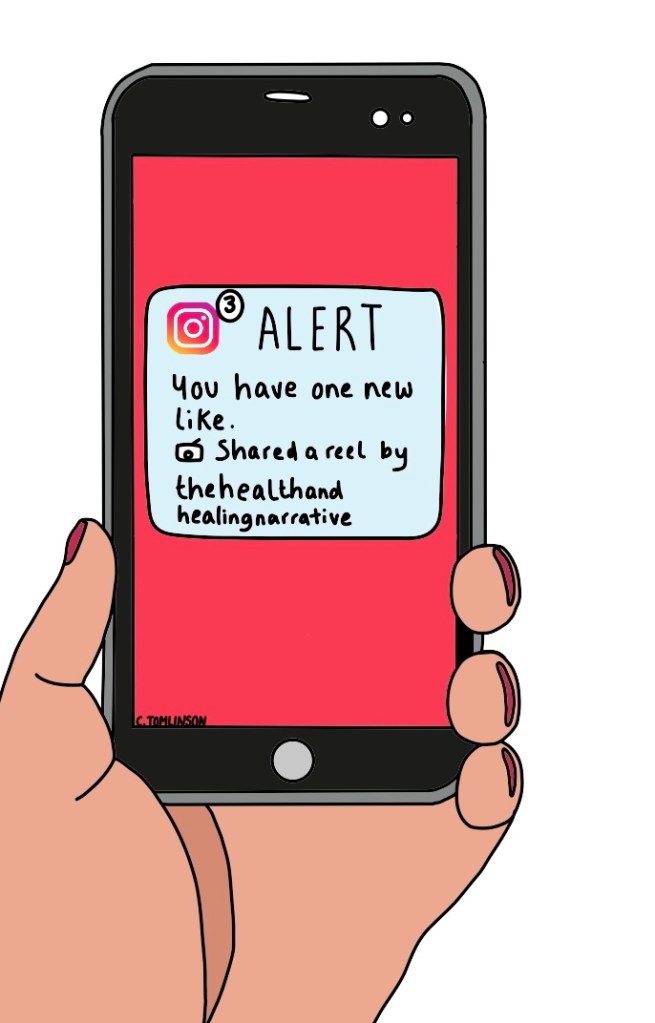
This is the signal or trigger to our brain to initiate a behaviour. Cues can be external (e.g., a sound or location) or internal (e.g., an emotion or thought).
EXAMPLE: seeing a notification on your phone.
Early in learning, cues tend to lead to goal-directed behaviour. When a cue appears, the brain evaluates the situation: What should I do now? What outcome do I expect? This process relies on brain regions involved in planning and decision-making, particularly the prefrontal cortex – the part of the brain that helps us weigh options, consider consequences, and make deliberate choices. This process allows behaviour to remain flexible and responsive to changes in the environment.
With repetition in a stable context, however, the brain begins to streamline this process. The cue becomes directly linked to the action itself, increasingly bypassing conscious evaluation. Control shifts toward habitual circuits, which involve the sensorimotor pathways connecting the cortex and the striatum. These are the neural pathways that “store” well-rehearsed routines, allowing behaviour to be performed automatically. In time, once a habit is established, seeing the cue can trigger the behaviour before we even think about it.
The routine
This is the behaviour itself – the action that follows the cue.
EXAMPLE: picking up your phone after seeing a notification and checking social media.
- In early, goal-directed learning, the routine is guided by expected outcomes. The brain constantly checks whether the action is likely to produce the desired result.
- In habitual behaviour, the routine is stored in sensorimotor circuits, which execute the action efficiently and automatically. The routine can run even if the outcome is no longer desirable, which is why habits can sometimes override conscious intentions.
The reward
This is the effect that the action has on our brain, and what strengthens the connection between cue and routine as a result. It doesn’t have to be dramatic – a small sense of pleasure, novelty, or relief is enough.
As behaviours are repeated in the same context, control gradually shifts away from brain regions involved in planning and decision-making (such as the prefrontal cortex) towards sensorimotor circuits linking the cortex and the striatum. This is why habits can feel as though they “just happen”: the behaviour is being driven by well-rehearsed neural pathways rather than conscious choice.
This is where dopaminergic pathways also play a critical role. Dopamine is a neurotransmitter involved in motivation, learning, and reinforcement, and it helps the brain mark which behaviours are worth repeating.
- The first time a behaviour produces a rewarding outcome, dopamine is released in the striatum, generating the pleasurable “reward” sensation that tells the brain, this action feels good.
- With repetition, when a specific cue consistently predicts that reward, the brain learns to fire dopamine in anticipation of the outcome – even before the behaviour is completed. This is the essence of dopamine anticipation theory. The cue itself comes to trigger dopamine release, reinforcing the cue–routine connection.
EXAMPLE: The first time you check social media and enjoy a funny post, dopamine is released after the behaviour, creating a rewarding feeling. Over time, simply seeing the notification – the cue – can trigger dopamine release before you scroll, making it more likely you will pick up your phone automatically. This anticipatory release strengthens the habit loop: cue → routine → anticipated reward → stronger cue–routine connection.
Importantly, the goal-directed system doesn’t disappear – it remains available to override habits. But engaging it requires mental effort and attention. That’s why stress, fatigue, or distraction often make us default to habitual behaviour: the autopilot circuits are easier and faster for the brain to use.
How to stay consistent
Now that we know how habits are formed, we can look at how we can make habits stick.
Start by noticing your existing habits
The first step to change is awareness. As we know, habits often run on autopilot, so take time to observe your daily routines.
- Keep a habit diary for a few days. Note when a behaviour happens, what triggers it, and what reward follows.
- Use this to identify patterns. For example, do you automatically reach for your phone after lunch? Or grab a snack when stressed?
Habit stacking
Habit stacking is a strategy where you attach a new behaviour to an existing, well-established habit. Because the existing habit is already supported by sensorimotor circuits and cues, adding a new action increases the likelihood it will become automatic.
EXAMPLE: If you already brush your teeth every night before bed (established cue → routine), you could add a new habit immediately after: “After I brush my teeth, I will read my book for 10 minutes.”

Habit tracking tips
Tracking your progress reinforces dopamine-related reward signals, giving your brain a sense of accomplishment and helping the habit stick.
- Check it off: Use a calendar, app, or journal to mark each time you complete the habit.
- Visual feedback: Seeing a chain of successful days (sometimes called the “Seinfeld method”) makes habits more rewarding and motivates continuation. Breaking the chain feels costly, which encourages consistency even on low-motivation days.
- I saw a great example of this recently: Silly Little Sticker Charts sell sticker charts designed for adults, turning habit tracking into something tangible, visual, and genuinely satisfying.
Use dopamine to your advantage
One of the key insights from neuroscience is that dopamine isn’t just about pleasure – it’s about motivation and learning. When a behaviour is paired with a rewarding experience, your brain releases dopamine, which reinforces the habit loop and makes you more likely to repeat the behaviour in the future.
You can harness this to make habits easier and more enjoyable.
EXAMPLE: Listening to your favourite music while cleaning or exercising. The music adds a small, predictable rewardthat your brain begins to associate with the routine. Over time, the activity itself becomes more enjoyable, and the cue (e.g., seeing a messy room or putting on your running shoes) begins to trigger anticipatory dopamine, making you more likely to act automatically.
Breaking bad habits
Your brain doesn’t distinguish between “good” and “bad” habits. The same circuits, cues, and dopamine signals are involved, which is why some habits are so hard to break.
Behaviours with strong, predictable rewards – what neuroscientists call dopamine-rich behaviours – are particularly stubborn, like sugary foods or nicotine. Relying on willpower alone rarely works, because your brain’s habitual circuits are faster and more energy-efficient than conscious control.
The good news? Neuroscience shows there are strategies that actually work.
1. Replace, don’t erase
You don’t need to wipe a habit from your brain. Instead, swap it for a new routine that satisfies the same cue.
EXAMPLE: If you’re trying to quit smoking, switching to vaping keeps the familiar hand-to-mouth action and break-time routine but changes the reward to something safer. Over time, your brain learns to respond to the cue with the new behaviour.
2. Modify cues
Habits are triggered by cues – your brain automatically responds before you even think about it. Change or avoid the situations that prompt the behaviour, and you reduce automatic responses.
EXAMPLE: Stress triggers snacking? Take a walk, stretch, or step outside instead. Change where you keep snacks or move away from the environment that triggers the habit. Adjusting the cue gives your goal-directed brain a chance to intervene.
3. Adjust rewards
The reward is what reinforces the habit loop via dopamine signalling. Simply stopping a habit without offering a satisfying alternative rarely works—the brain expects a positive outcome.
EXAMPLE: Replace afternoon sugary snacks with fruit you genuinely enjoy, or pair the new habit with a small pleasure, like a cup of tea or a short break outside. Over time, your brain starts to associate the cue with this new rewarding behaviour, strengthening the habit loop.
Sustainable habits for 2026
Sustainable habits aren’t about perfection – they’re about designing behaviours that align with your brain’s chemistry. Motivation alone rarely sticks; small, consistent actions are what reinforce the habit loop over time.
1. Start small
Begin with a tiny, manageable action instead of overhauling your life all at once.
- EXAMPLE: Instead of “exercise for an hour,” start with 5 minutes of stretching or a short walk.
2. Leverage cues
Attach new behaviours to existing routines – your brain already recognises the cue, making automation easier.
- EXAMPLE: Meditate after making your bed.
3. Track and celebrate
Small rewards and feedback reinforce dopamine signalling, making the habit more likely to stick.
- EXAMPLE: Only buy your favourite coffee after completing exercise.

4. Replace bad habits
Swap unwanted behaviours for healthier alternatives rather than trying to suppress them.
- EXAMPLE: Replace mindless scrolling with a short walk or reading a page of a book.
5. Be patient
Habits take time to solidify. Even small actions repeated consistently eventually become automatic.
- EXAMPLE: 2 minutes of daily meditation can quickly grow into a 10-minute habit.
Key takeaway: Focus on small, consistent changes, leverage cues and rewards, and give your brain time to automate the behaviour. That’s how habits stick.
In Summary
Habits shape much of what we do – often without us even noticing. From doom-scrolling on our phones to grabbing a snack when stressed, these behaviours are driven by well-rehearsed neural pathways, reinforced by cues, routines, and dopamine-related rewards. Early on, behaviours are goal-directed, requiring conscious planning, but with repetition, they become habitual, allowing our brains to act automatically and efficiently.
The good news? Understanding how habits work, you can turn small, deliberate actions into lasting, automatic habits – making 2026 your most consistent, healthy, and productive year yet.
Which small habit would you like to start in 2026, and what cue will help you stick with it? Which strategy from this article do you think will help you the most: habit stacking, tracking, or using dopamine to your advantage?
I’d love to hear from you! Please leave a comment below.
 The Health and Healing Narrative
Leave a comment