
By Inaaya Ashraf
Remember that time you were sitting in the waiting room, counting down the minutes until your name was called, and then you finally see your doctor for the blood test results? Something completely normal and common, right? Remember the feeling of butterflies in your stomach. The racing heartbeat. The sweaty palms?
And then after all of that worry, you’re completely fine.
So why did it feel like a phone vigorously vibrating in your pocket, even though there was no notification?
I’ve since learned that the human brain cannot always tell the difference between a perceived threat and physical danger. It’s all due to the nervous system doing its job a bit too well.
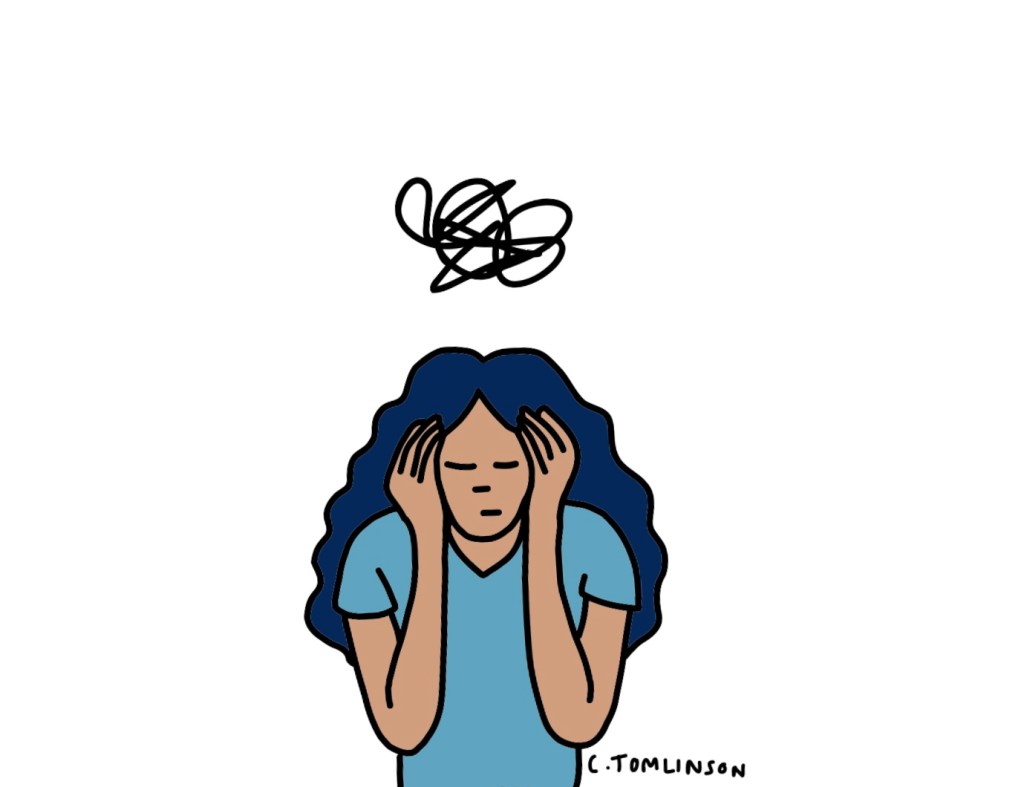
The nervous system
The role of the nervous system simply is to detect danger and prepare the body for action. It protects you, even when it doesn’t know something is truly a risk, and causes a response to these situations.
In terms of preparing the body for danger, there are two main parts of the nervous system that help do this: the sympathetic and the parasympathetic nervous systems. Both of these are extremely essential – the first prepares the body and the latter relaxes the body once the hazard has been eliminated.
The science behind this
Over time, I learned that once the brain detects danger, the sympathetic branch is activated, which releases the hormones adrenaline and noradrenaline. These work together to stimulate the “fight or flight” response.
As a result, my heartbeat becomes faster, my muscles become tense, my senses sharpen and breathing becomes rapid. At the same time, processes that the body usually handles in the background – like digestion – begin to slow down and become inhibited, because energy is being transported to functions that the body recognises as urgent.
On the morning of GCSE results day, I remember feeling completely consumed by stress and anxiety before I even opened the envelope. My breathing was faster than usual. I could feel my muscles tensing up. My body was just responding to the ’danger‘ I was holding in my hands – and this is completely normal.
However, this feeling was extremely short-lived. After some time, those feelings started to disappear. My heartbeat returned to normal, I wasn’t sweating as much; I was calmer.
Why?
All thanks to the parasympathetic branch. As soon as this branch is activated, all the symptoms of the sympathetic branch start to die down, and the body is restored back to its normal state.
This proves that our nervous system is always active, ready to prepare the body for potentially dangerous situations.
Repeated activation
Frequent stress can keep the brain on high alert. Whether its school, work, or life in general, stress is always present. But when stress becomes a habit, the brain becomes more familiar with triggering a response. After a while, it can happen more often and more easily.
For example, even small things — like getting a random message, a teacher asking me to stay behind, or even having to ask someone a question — would cause a rush of tension within me. It was overwhelming and overstimulating.
What I had to realise was that this was the effect of my body being on high alert for a while, and these responses became normal for me, even in the smallest of situations.
Fear does not mean we are broken or weak. It’s a natural process curated by our powerful yet complex body, responding to real-life situations exactly as it’s designed to do.
With time, we learn to cooperate with our body and heal with awareness of what it is trying to tell us. Fear and stress are part of a journey we all go through, helping us understand ourselves from different perspectives and recognise the triggers that affect us.
As we learn how to ease those fears, we build confidence – in speaking publicly, in meeting new people, and in facing situations that once felt overwhelming.
We can learn how to adapt to our body’s natural way of protecting us.
I realised that my body wasn’t struggling. It was trying to protect me for longer than it needed to.
Editor’s note: Reflection on this article
As I read this piece, I kept thinking about how familiar that feeling is — I experienced it myself just last week while chairing a dermatology conference for the first time. I felt completely out of my comfort zone. In situations like this, the body often reacts first, and the mind follows later.
The physical sensations we experience when we feel stressed or nervous are signs that our bodies are trying to protect us. Over time, these responses can be triggered more easily, especially when we have become used to living on “high alert.” What stayed with me most is the shift in perspective that Inaaya describes — the moment when fear stops feeling like failure and begins to make sense.
When we recognise that these reactions are protective rather than problematic, it allows us to respond to ourselves with greater kindness and understanding. Simply sitting with the feeling and taking deep breaths can help, too — deep breathing activates the parasympathetic nervous system, just as Inaaya explains, helping the body to relax and restore calm.
- How do you usually cope with feelings of stress or fear?
- What small strategies, like deep breathing, help you feel calmer when your body is on high alert?
I’d love to hear from you! Please leave a comment down below.

This guest post was written by Inaaya Ashraf, a sixth-form student and aspiring medic.
She has kindly given us permission to share her story on here.
 The Health and Healing Narrative
Leave a comment