
By Dr. Chinyere Martins-Odum, MBBS, BNSc
Mpox, formerly called Monkeypox, is an infectious disease caused by the Monkeypox virus. Beyond physical illness, it carries psychological and social sequelae.
Contents
- The 2022 UK Mpox outbreak and disproportionate impact on GBMSM
- Mpox stigma and public health messaging: a double-edged sword
- Misconceptions about Mpox transmission
- Psychological impact of Mpox-related stigma
- The link between psychological distress and physical health
- Mpox care pathways in the UK
- Reducing Mpox-Related Stigma
- What Clinicians Can Do
- What Patients and the Public Should Know
DISCLAIMER:
While I am a practising doctor, the information on this site is for educational purposes only. It does not take into account your personal circumstances, which can significantly affect medical decision-making and treatment. This content therefore does not constitute medical advice, and should not be relied upon for diagnosis or treatment. Always consult a qualified healthcare provider regarding any health concerns.
This article was written by a guest writer, and published on the 09/02/2026 using up-to-date sources at that time. Please be aware that medical information and guidelines change often.
The 2022 UK Mpox outbreak and disproportionate impact on GBMSM
During the UK Clade IIb outbreak in 2022, 3,732 cases were reported, disproportionately affecting gay, bisexual, and other men who have sex with men (GBMSM). Many experienced stigma across social media, daily life, and healthcare settings. This prejudice led some to delay or avoid care, undermining public health efforts and worsening outcomes. Addressing Mpox requires highlighting the psychological impact of stigma, understanding how it creates barriers to care, and implementing evidence-based interventions to reduce harm.
Mpox stigma and public health messaging: a double-edged sword
Following the 2022 outbreak, public health messaging aimed at raising awareness, improving understanding, and reducing transmission unintentionally contributed to misinformation and scapegoating. Although these messages were grounded in epidemiological* data and designed to identify groups at higher risk to guide targeted interventions, they also reinforced stigma against those same communities. It was, in many ways, a double-edged sword.
This pattern mirrors earlier public health responses to HIV/AIDS, where identifying “risk groups” such as men who have sex with men, people who inject drugs, or those engaging in unprotected sex led to widespread stigma rather than improved understanding.
*Epidemiology: the study of how diseases affect different groups of people and why.

Misconceptions about Mpox transmission
The continued framing that “Mpox primarily affects GBMSM” has persisted in some literature, despite evidence of broader transmission routes, including contact with contaminated clothing or bedding, direct contact with sores, and droplet transmission*. Cases have also been documented among pregnant women and children. Such narrow framing risks misleading the public and may lead clinicians to overlook other Mpox clades —genetic groups of the virus—and their distinct epidemiological patterns.
*Droplet transmission: Droplet transmission is the spread of infection through respiratory droplets released when an infected person coughs, sneezes, talks, or breathes at close range. These droplets travel short distances (usually up to 1–2 metres) and can infect others by landing on the eyes, nose, or mouth during close, face-to-face contact.
Psychological impact of Mpox-related stigma
The psychological impact of Mpox-related stigma is significant. In a 2025 survey of 115 men who have sex with men, 82% reported discriminatory comments on social media, 41.7% faced workplace discrimination, and 34.8% experienced stigma in healthcare. Paterson et al.’s study of 437 respondents found 50% encountered negative judgment or avoidance, the most common forms of stigma. Nearly three-quarters feared physical harm in their neighbourhoods. Stigmatising beliefs included perceptions that people with Mpox are dangerous, dirty, immoral, or personally responsible for infection.
These experiences have profound psychological consequences. In the Paterson et al. study, participants reported shame, anxiety, fear, depression, isolation, and withdrawal. These emotions often led to delayed or refused care. A UK survey of 1,932 people in 2022 found that while 86% were willing to accept vaccination, only 49% would seek healthcare if symptomatic. Another study in Brazil showed that even though 95.1% were willing to get vaccinated, only 54.9% of people with skin symptoms sought help, with many avoiding healthcare due to fear of discrimination. Such stigma undermines early diagnosis, contact tracing, and outbreak control, worsening both individual outcomes and public health responses.
The link between psychological distress and physical health
Psychological distress also has measurable effects on physical health. Evidence suggests that sustained stress and distress can disrupt biochemical and metabolic processes, increasing vulnerability to illness and delaying recovery. Viewed through this lens, Mpox-related stigma not only discourages individuals from seeking care but may also worsen health outcomes by compounding psychological and physiological stress.
Mpox care pathways in the UK
In the UK, people who suspect they may have Mpox are advised to avoid close contact and self-isolate to reduce transmission. They should contact a sexual health clinic or a general practitioner (GP).
Sexual health clinics are central to NHS Mpox care, offering confidential testing, diagnosis, treatment, and vaccination, particularly for higher-risk groups, while GPs can refer patients to specialist services when needed.
If Mpox is confirmed, individuals should continue isolation until all sores have healed. Care is mainly supportive, including symptom management, monitoring, vaccination of close contacts, and partner notification to support timely assessment and care.
Despite the availability of these services, significant barriers remain. LGBTQ+ individuals may avoid healthcare settings due to fear of judgment or past experiences of discrimination. These factors further reduce access to timely diagnosis, treatment, and vaccination.
Editor’s note: Symptoms of Mpox
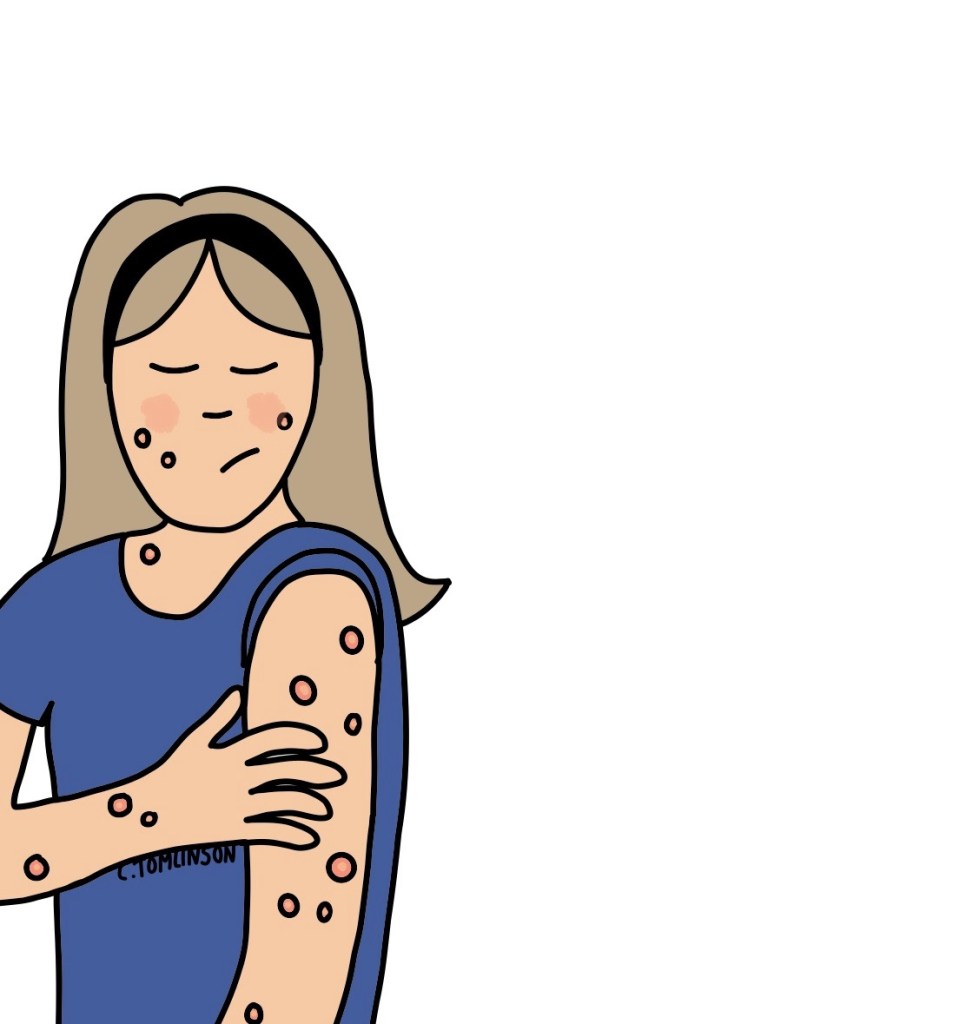
Typical symptoms of Mpox include fever, headache, muscle aches, fatigue, swollen lymph nodes, and a characteristic rash that progresses from spots to fluid-filled blisters before scabbing over. The rash may appear on the face, hands, genitals, or other parts of the body and can be painful or itchy, and it tends to appear 1-5 days after the first symptoms.
Most cases are mild to moderate and can be managed conservatively at home. Supportive care includes rest, adequate hydration, simple analgesia (such as paracetamol or ibuprofen), avoiding scratching your skin, and monitoring for signs of secondary infection. You will need to self-isolate if you are diagnosed with Mpox. See full guidance here.
In otherwise healthy individuals, symptoms typically resolve within 2–4 weeks, with full recovery expected once lesions have healed and scabs have fallen off.
Reducing Mpox-related stigma
Reducing Mpox-related stigma requires clear public health communication, education, and community engagement. Messaging should explain that Mpox spreads mainly through close contact with sores, contaminated materials, and prolonged face-to-face exposure. This shifts focus away from sexual orientation and towards specific risk behaviours, helping reduce stigma and misinformation.
Refined messages should be shared on platforms where stigma commonly arises, such as social media and dating apps. Targeted training for healthcare staff should emphasize respectful communication, cultural sensitivity, and psychosocial support. Involving LGBTQ+ communities in developing and sharing health information improves trust, vaccine uptake, and timely care-seeking, helping to counter stigma effectively.
What clinicians can do
For clinicians, a key insight is that stigma itself functions as a clinical risk factor. It shapes how patients interpret symptoms, whether they disclose concerns, and how quickly they engage with care. Small changes in clinical interactions can significantly improve trust and care-seeking behaviour.
Patient encounters should be person-centred and holistic, addressing not only physical symptoms but also fears, anxieties, and concerns about judgement. Clinicians should be mindful of unconscious bias—attitudes or stereotypes that can unintentionally influence behaviour—and actively counter these through self-reflection, empathy, structured communication, and mindful practice.
What patients and the public should know
For individuals currently affected by Mpox, and for the wider public, it is important to emphasise that Mpox is a medical condition, not a moral failing. Reliable information should be sought from trusted sources such as the NHS website and local sexual health services. When Mpox is suspected, following established NHS care pathways remains essential for personal health and community protection.
Ultimately, addressing Mpox-related stigma is a shared responsibility involving healthcare professionals, public health agencies, the media, and the public. By challenging misinformation and promoting compassionate, evidence-based care, we can reduce the psychological harm of stigma and strengthen future outbreak responses.
Editor’s note: Reflection on this article
This interesting article explores Mpox not only as an infectious disease, but as a social and psychological issue shaped by stigma, prejudice, and the unintended consequences of public health messaging. Drawing on supporting data, it shows how marginalisation and fear can delay care, worsen health outcomes, and weaken outbreak control. By centring compassion, accuracy, and inclusive healthcare practice, the article makes a compelling case that addressing stigma is as essential to Mpox response as clinical management.
- How can public health communication acknowledge risk without reinforcing stigma or marginalisation?
- What responsibilities do healthcare professionals have in addressing the psychological and social impacts of infectious disease?
- What practical steps could help reduce stigma and improve trust in healthcare during future outbreaks?
I’d love to hear your thoughts! Please leave a comment below.

Dr. Chinyere Martins-Odum is a medical officer in Nigeria with training in medicine and nursing (MBBS, BNSc). She is passionate about equitable, person-centred healthcare and patient advocacy. Her professional interests include research and health education, with a strong commitment to improving access to care and health outcomes for diverse communities.
Check out more of her work on Linkedin here.


 The Health and Healing Narrative
Leave a comment