
By Dr Hassan Khalil, NHS GP and GP Expert Witness
For today’s blog post, we’re doing something a bit different. I recently spoke with Dr Hassan Khalil, an NHS GP and GP Expert Witness, to better understand what happens when clinical practice is examined through a legal lens. We often hear the term “expert witness” in the context of high-profile cases or legal dramas, but what does it actually mean in everyday general practice? And what does a GP expert witness do, and how do they determine whether the standard of care has been met?
Let’s get into it.
1) What exactly does an expert witness do, and how do they influence the outcome of a claim?
An expert witness provides an independent, expert opinion to a court on matters requiring specialised knowledge, skill, or training. My primary role is to help the court navigate complex clinical issues by offering unbiased, factual information. Crucially, as defined by CPR Part 35*, an expert witness’s duty is to the court, not to the party that instructs them.
As a GP Expert Witness, I offer specialised insights into primary care medical cases, with a focus on clinical negligence and standards of care. My role involves reviewing medical records, producing court compliant reports, and providing oral evidence in court when required.
Read more here: https://gpmedicolegalreports.co.uk/blog/what-is-an-expert-witness
Editor’s note: *CPR Part 35
CPR Part 35 refers to Part 35 of the Civil Procedure Rules (CPR), which governs the use of expert evidence in civil court proceedings and sets out how civil cases are conducted in the courts of England and Wales. If interested, you can read more here.
2) From your work as a GP expert witness, what are the most common clinical errors or pitfalls you see in primary care cases?
Most cases revolve around several recurring themes where the standard of care is brought into question:
- Referral Failures: These often involve a delay in, or lack of, referral particularly regarding 2 week wait suspected cancer referrals or emergency secondary care admissions.
- Delayed Diagnosis: Claims often arise when a patient has presented multiple times with similar or worsening symptoms ultimately leading to a delayed diagnosis. Initiatives like Jess’s Rule highlight the importance of listening to patient concerns during repeat consultations to prevent diagnostic inertia.
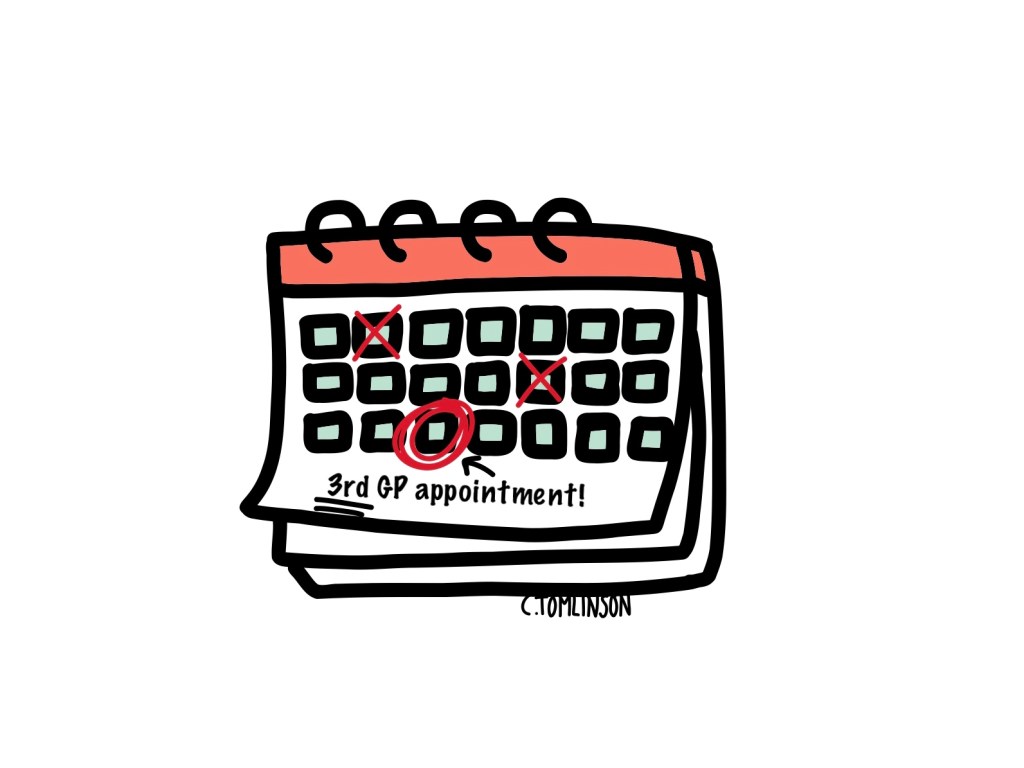
- Safety Netting Failures: A failure to provide clear, documented instructions to the patient regarding ‘red flag’ symptoms, specific timeframes for improvement, and clear instructions on how and who to escalate to if their condition deteriorates.
- Administrative & System Errors: These include ‘latent errors’ where a referral was clinically intended but the task was never initiated, or was sent to the administration team but not actioned, e.g., a GP completes a suspected cancer referral and sends a task to the secretary but the task is marked complete but the referral not sent.
3) How important is record-keeping in defending clinical decisions, and do you have any practical tips for clear, defensible documentation?
In healthcare, the famous saying is ‘if it isn’t documented, it didn’t happen’.
Because clinical negligence claims often arise years after the clinical encounter, the medical record becomes the only reference for the clinician. As an expert witness, I look through these notes to reconstruct the clinical encounter which is why clarity and thoroughness are crucial.
For effective documentation it is important to include both positive and negative findings. Beyond the usual clinical signs, descriptions of other observations, e.g., whether the patient walked into the consultation room and their ability to get onto the examination couch can give valuable context.
Before finalising your noting it is important to ask yourself if the note paints a clear, reconstructible picture of the patient’s condition for someone potentially reading many years from now.
Editor’s note: How long after a clinical event can a clinical negligence claim be made?
In England and Wales, clinical negligence claims are generally subject to a three-year limitation period under the Limitation Act 1980.
This three-year period usually runs from either:
- The date the alleged negligence occurred, or
- The “date of knowledge” — when the patient first became aware (or could reasonably have become aware) that their injury may have been caused by negligent care.
There are important exceptions:
- Children: The three-year period does not begin until their 18th birthday, meaning they typically have until age 21 to bring a claim.
- Patients lacking mental capacity: The limitation period may be paused indefinitely unless capacity is regained, at which point the three-year limit applies.
- Fatal cases: The three-year period may run from the date of death or the date of knowledge of negligence of the personal representative.
While courts retain discretion to allow claims outside these time limits in certain circumstances, this is not guaranteed.
This is why, in many clinical negligence cases, medical records from years — sometimes decades — earlier become central to proceedings. Documentation written in the moment may later serve as the only contemporaneous account of what occurred.
4) When you’re assessing a case, what are the key factors you consider in determining whether the standard of care was met?
Determining whether the standard of care was met requires a thorough, evidence based approach. Initially, it is vital to have a complete data set, including all relevant medical records and the specific instructions provided by the instructing party.
I would then review relevant clinical guidelines and consider how a body of reasonably competent GPs would have handled the same situation. I apply the Bolam and Bolitho tests to evaluate the care provided, ensuring that the clinical actions are benchmarked against national guidelines and standards prevalent at the time of the event.
Editor’s note: Bolam and Bolitho tests
The Bolam v Friern Hospital Management Committee case established what became known as the Bolam test. In simple terms, a clinician is not negligent if their actions would be supported by a responsible body of professionals practising in that field at the time. Medicine allows for differences in professional opinion — and the law recognises this.
However, the later case of Bolitho v City and Hackney Health Authority refined that principle. The court held that the professional opinion relied upon must also be logical and defensible. It is not enough for a body of professionals to support a decision; that opinion must withstand rational analysis.
5) How strictly should clinicians follow national guidelines vs exercising individual clinical judgment, and how does this appear in negligence cases?
While guidelines provide an essential framework for evidence based practice, they are not a rigid ‘marking sheet’ for clinical competence. Medicine is inherently nuanced; guidelines are exactly that, guides, that are intended to support, not override individual clinical judgment.
In negligence cases, a departure from guidelines does not automatically equate to a breach of duty. The key question is whether the clinician’s decision to deviate from guidelines was underpinned by a logical rationale that a responsible body of reasonably competent GPs would support (the Bolam test). As an expert, I look for documentation that justifies why a specific guideline was or was not followed in that clinical scenario.
6) In your experience, how does communication with patients influence the likelihood of a claim or complaint?
In my experience, communication is the single most influential factor in whether a clinical encounter escalates into a formal complaint. Many complaints are rooted in non-clinical issues, specifically, the patient’s perception of the interaction rather than the medical outcome itself.
In cases of delayed diagnosis, a recurring theme is the patient feeling ‘unheard’. This is why the ICE (Ideas, Concerns, Expectations) framework is so powerful. By systematically eliciting what the patient thinks is wrong, what they are worried about, and what they hope to achieve, the clinician can align their priorities with the patient’s. Once this is achieved, the likelihood of an ‘unsatisfactory’ consultation, and the subsequent claim is significantly reduced.
7) If you could give one piece of advice to practising GPs to strengthen patient safety and minimise risk, what would it be?
The most effective way to strengthen patient safety is to document your clinical rationale, not just the facts. Because claims often arise years later, your notes must serve as a “witness” to your thought process and explain any deviations from guidelines.
The ICE framework (Ideas, Concerns, Expectations) is key to ensure the patient feels heard. Many complaints are triggered by a non clinician issue and documenting the ‘ICE’ and subsequent plan can significantly reduce the likelihood of a formal complaint.
Editor’s note: Reflection on this article
When we hear the term “expert witness”, it often feels far removed from everyday general practice; a term used in courtrooms, not our consultation rooms. And talking about complaints and medico-legal claims can feel uncomfortable — even frightening — as clinicians.
Speaking with Dr Hassan Khalil has reframed this for me. So often, cases don’t arise from reckless practice, but from gaps in documentation — clinical reasoning not written down, safety-net advice being given but not recorded, a follow-up timeframe that felt clear in conversation but never made it into the notes. And if it’s not written down, how can we be sure it happened? We can’t — especially when you’re a GP seeing 18 patients in 3 hours.
The reality is that most of us will face some form of complaint during our careers. That isn’t a reflection of being unsafe; it’s a reflection of the complexity and volume of the work we do. Avoiding the topic doesn’t protect us. Being thoughtful about it might.
Since this conversation, I’ve been trying to focus more deliberately on documenting my clinical rationale — not just what I did, but why I did it. Writing the exact safety-net advice given, being explicit about follow-up plans. Even when clinic is running late and the temptation is to close the screen and move on.
Talking about this isn’t meant to induce fear at all. It’s a quiet reminder that good documentation is part of good clinical care — for our patients, and for our future selves.
- Do you consciously document your clinical rationale, or is it something you do only when a case feels higher risk?
- What safety-netting or documentation habits have you found most helpful in your own clinical practice?
- What strategies do you use to ensure patients feel heard during time-pressured consultations?
- Have you changed your documentation style over time as your clinical experience has grown?
I’d love to hear from you — please leave a comment below!

Dr Hassan Khalil is a General Practitioner and Bond Solon trained Expert Witness. He specialises in providing independent, CPR 35 compliant medico-legal reports. For instructions, CVs, sample reports, or to discuss a case, visit www.gpmedicolegalreports.co.uk. You can also find his LinkedIn here.
 The Health and Healing Narrative
Leave a comment