
Language shapes our perception and attitudes, especially concerning mental health. The terminology used can be confusing and varies significantly, often sparking contention amongst the public and healthcare practitioners (HCPs) alike. This article explores how nuances in language and definitions impact our understanding and treatment of mental health in modern society.
Contents.
- Definitions from the WHO.
- Oversimplification of a complex concept.
- The medicalisation of mental health – going beyond language.
- Reinforcement of a false dichotomy.
- The impact of language on stigma.
- Role of the media in shaping language.
- In summary.
Definitions From The World Health Organisation (WHO).
Mental health refers to a state of emotional, psychological, and social wellbeing, that plays a key role in determining how we handle stress, relate to others, live and learn, and make choices throughout our lives.
This concept exists on a spectrum, and people’s position on this spectrum can fluctuate based on life experiences and personal circumstances. It is a “silent struggle”, as mental illness often isn’t immediately visible, and people often try and mask what they’re experiencing.
Conversely, a mental disorder, mental health condition or mental illness is a “clinically significant disturbance in an individual’s cognition, emotional regulation, or behaviour.” There are various conditions listed on the ICD-11*, including: Depression, Anxiety, Schizophrenia, Bipolar and related disorders, and more. For the purpose of this article, we will use “mental illness” to refer broadly to these conditions.
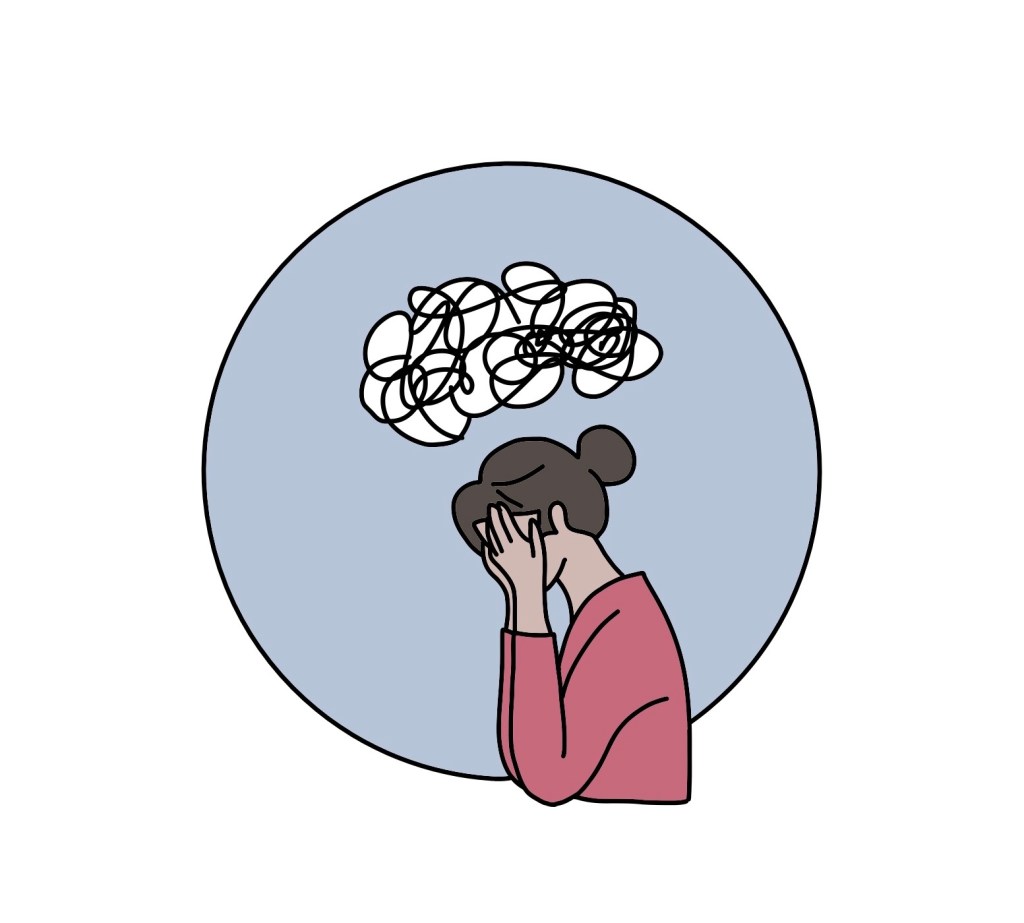
1 in 8 people worldwide are estimated to be living with a mental illness, equating to 970 million people in total, the most common being anxiety and depressive disorders (around 301 million and 280 million people respectively).
The interpretation of these two definitions is that while everyone will experience mental health fluctuations, not everyone will experience a mental illness. Those with mental illnesses are more likely to experience poorer mental health, although effective management can mitigate this.
Meanwhile, individuals without a mental illness diagnosis can still struggle with their mental well-being. Promoting good mental health usually involves wellbeing practices, whereas treating mental illnesses usually requires specific clinical interventions like therapy or medication.
*All physical and mental illnesses are classified according to the ICD-11 (International Classification of Diseases), a system that is widely used in many countries including the UK. An alternative is the DSM-5.
Criticisms of The Current Definitions.
Oversimplification of a Complex Concept.
While viewing mental health as a spectrum is helpful, it can oversimplify a complex reality. This perspective champions positive emotions and high levels of functioning as benchmarks for “good mental health”, implying that those struggling with productivity or contentment are inherently unwell, when this isn’t always the case.
There are many influences in our day-to-day lives too that can hinder productivity yet are very much vital to the human experience – from being unwell with the flu for a few weeks to the heartbreak experienced following a break up; the human experience can be sad, frightening, unsatisfactory or challenging, as well as fulfilling and fruitful at times – the struggle is part of life’s reward and not necessarily an indicator of poor mental health. This oversimplification risks alienating those who may experience temporary struggles but do not have a mental illness, as their experiences are very much valid.
Dr Gabor Maté, a Physician experienced in trauma, addiction, stress and childhood development, suggests that:
“Trauma, from the Greek for “wound”, “is not what happens to you; it is what happens inside you as a result of what happens to you … It is not the blow on the head, but the concussion I get.”
Angela O’Connor, an experienced Therapist of 35 years and Clinical Director of Mersey Counselling and Therapy Centre, builds on this by suggesting:
“If we ask the question “What happened to you?” rather than, “What’s wrong with you?”, we generally open up a much more interesting and fruitful conversation.
This reframing of the narrative can prevent viewing mental health issues and mental illness solely as inherent flaws needing correction, instead viewing it from a more holistic perspective.
The Medicalisation of Mental Health – Going Beyond Language.
The term medicalisation describes the process by which human problems are defined and treated as medical issues, an approach that equates “good health” with being “disease free”. The WHO’s adoption of specific definitions for mental health and mental illness in the ICD-11 can further drive the medicalisation of mental illness, which can potentially have both positive and negative impacts.
On one hand, the medicalisation of mental health can help de-stigmatise these illnesses. By legitimising mental illnesses as valid health concerns with potential biological footings in the brain and using language that facilitates this, this can foster a greater understanding of mental illnesses as genuine medical conditions. This shift can enhance psychiatry’s credibility, aligning it more closely with its medical speciality counterparts.
Clear definitions may also improve recognition within healthcare systems, leading to better access to treatment and support services, and potentially driving more funding into mental health research. Furthermore, a common language among HCPs can help improve communication and consistency in diagnosis and treatment.
However, this perspective is not without its critics. Thomas Szasz, a psychiatrist known for his critical views on the institution of Psychiatry, argued that mental illnesses are problems of living and not “illnesses” or “diseases”. The following is an extract from his article “The Myth of Mental Illness” in 1980:
“When a person hears me say that there is no such thing as mental illness, he is likely to reply: “But I know so-and-so who was diagnosed as mentally ill and turned out to have a brain tumour. In due time, with refinements in medical technology, psychiatrists will be able to show that all mental illnesses are bodily diseases.” This contingency does not falsify my contention that mental illness is a metaphor. It verifies it.“
Szasz’s argument suggests that finding a physical cause for what is labelled as a mental illness does not confirm the validity of the term “mental illness”; rather, it indicates a misdiagnosis. For Szasz, the notions of mental illness and brain disease are mutually exclusive, i.e., it can have either psychopathology or neuropathology, not both.
In contrast, some modern psychiatrists and psychologists reject the idea of mutual exclusivity between mental illnesses and brain disorders. They recognise a complex interplay between the two, advocating for a holistic understanding that incorporates both biological and environmental factors. This perspective argues that using medical terminology and medicalisation of mental health therefore does not diminish the importance of recognising the broader context of mental health.
However, there are also concerns about over-diagnosis and over-treatment within this medicalised framework. Individuals facing difficulties or unhappiness may be labelled as having a mental illness, leading to unnecessary treatment. Dr Jonathon Burns, an Honorary Professor of Psychiatry at the University of Exeter, cautions that this can have detrimental effects:
“I think it is unhealthy for a society to become navel-gazing in the extreme, where common normal difficulties and challenges in life are pathologised and pushed into the realm of sickness.“
“It is bad for individuals themselves – taking on sick roles and removing themselves from everyday tasks of living such as work, parenting, participating in society. It is bad for communities and economies – with more and more people seeing themselves as sick or disabled – expecting more materially from society to support them, costing the society more and more, and yet taking on a label that excuses them from contributing materially to that society. And it is bad for the mental health profession and service itself, as it serves to devalue what mental health is and what the services and professionals can provide.“
“It removes the focus from helping those with real and disabling illnesses, and becomes a vague, diffuse social entity that begins to appear ridiculous and not credible in its social role.”
While medicalisation of mental health has potential benefits such as de-stigmatisation and improved access to care, it also raises important questions about diagnosis, treatment, and the complexity of mental illnesses.
Reinforcement of a False Dichotomy.
Traditional definitions of mental health and illness can create a false dichotomy* between mind and body, ignoring the intricate interplay between the two. This notion stems for mind-body dualism, a 16th century concept coined by the Philosopher René Descartes, and refers to the idea that the mind and body are distinct entities. Such a perspective may lead society to believe that mental illness resides solely within the mind, implying it is entirely within our conscious control.
Modern psychiatry increasingly recognises the interconnectedness of mental and physical health. For instance, research indicates that significant psychiatric conditions, such as Schizophrenia, involve both mental and neural dysfunction (neural referring to activity of the nerve cells within the brain). This understanding emphasises the importance of treating mental health issues holistically, rather than purely through a medical lens.
*Dichotomy = a difference between two completely opposite ideas or things.
The Impact of Language on Stigma.
Stigma refers to the negative or unfair belief that a society has about something, in this context in relation to mental health issues. It also includes self-stigma, where individuals internalise negative attitudes about their condition.
Historically, language surrounding mental illness has been fraught with stigma; before the Mental Health Act of 1959 was passed, people with mental illnesses were described as “lunatics”, “imbeciles” or “idiots”, and often confined to Asylums.
Unfortunately, stigmatising language persists today; talking about being “bipolar” when experiencing mood swings is not the same as living with bipolar affective disorder, referring to someone as “psycho” stigmatises people with illnesses causing acute psychosis, and describing someone as “anorexic” because they look thin falls short of understanding that anorexia as a condition is much more complex than losing weight and being thin.
Using terms like “disorders” or “illness” (as in the WHO definitions) can further contribute to stigma, affecting individual self-perception and societal attitudes. The word “disorder” may imply dysfunction, leading to feelings of shame and inadequacy and may result in a delay in people seeking help. Similarly, “illness” also implies a medical condition which can suggest a purely biological cause, neglecting the contributing environmental, social, and emotional factors that are often in play and inciting fear or misunderstanding.
However, many individuals find identifying with a diagnosis empowering. Terms like “mental illness” can provide validation, allowing other parts of their identity to still exist alongside their illness so that it doesn’t define them. It can also provide a sense of belonging and reduce feelings of confusion and isolation, connecting individuals with support groups and encouraging conversations that challenge stereotypes.
Role of The Media In Shaping Language.
The language used in the media can significantly impact people’s perceptions of mental health, raising awareness, and influencing cultural narratives. Studies show that 1 in 4 people encounter mental health in the media felt inspired to share their experiences as a result. Conversely, the use of stigmatised language can reinforce stereotypes and create apathy towards mental health issues.
For example, the media often sensationalises mental illness by linking it to violence. While only 4% of interpersonal violence in the US is due to mental illness, 40% of news stories portray these individuals as violent. In reality, people with severe mental illness are ten times more likely to be the victims of a violent crime than the general public.
In Summary.
The language we use when discussing mental health profoundly influences societal attitudes and individual experiences. By choosing our words carefully and engaging in open conversations, we can challenge stigma and create a more supportive environment for those affected, helping reshape the narrative around mental health. Let us remember that mental health is complex, and understanding it requires a compassionate approach that goes beyond labels and set definitions.
What experiences have shaped your understanding of mental health? How has the language used in relation to mental health affected you? Do any parts of this article resonate with you, and are there parts you disagree with?
This is an important and potentially contentious topic – diverse perspectives are therefore key, and there is no right or wrong answer. I’d love to hear your thoughts, so please leave a comment down below!
Responses
-
It will be fascinating to see if we do break down the psycho/neuropathology of psychiatric diagnoses in coming years. The interplay between the brain and the body is already being proven in conditions like Parkinsons (some relevance to the gut microbiome which i have completely forgotten…). Something must surely be able to explain why every other person with POTS/ME/CFS has a long-standing mental health diagnosis.
LikeLike
-
Definitely, there’s still so much we still have to learn about the mind-brain-body connection and it will be interesting to see what advancements are made in coming years.
Interesting though how in medicine we always strive to find an “underlying cause” – this could link back to the argument that perhaps we are over medicalising mental health? Does there always need to be an underlying physical cause? What happens if we don’t find one? Food for thought.
LikeLike
-


References:
Most citations/references are linked throughout the article – see highlighted text for more.
https://www.who.int/news-room/fact-sheets/detail/mental-health-strengthening-our-response
https://www.psychiatrictimes.com/view/mental-illness-vs-brain-disorders-szasz-dsm-5
https://www.ncbi.nlm.nih.gov/pmc/articles/PMC5347358/
https://www.ncbi.nlm.nih.gov/pmc/articles/PMC7063027/
https://www.ncbi.nlm.nih.gov/pmc/articles/PMC4028926/
https://icd.who.int/browse/2024-01/mms/en#334423054
[i] https://www.psychiatrictimes.com/view/mental-illness-vs-brain-disorders-szasz-dsm-5
 The Health and Healing Narrative
Leave a reply to Charlotte Cancel reply