
When you schedule an appointment with your healthcare practitioner (HCP) – whether it’s for a routine check-up or a more specific concern – preparation is key to getting the most out of your visit.
HCPs are there to help, but they rely on your input to make informed decisions about your care. Knowing exactly what to bring and what to share can make a huge difference in how efficiently and effectively your appointment goes.

In this article, we’ll cover everything that you need to do and think about beforehand, so that you can get the most out of your appointment.
Before Your Appointment
1. Are You Accessing The Right Service For The Care You Need?
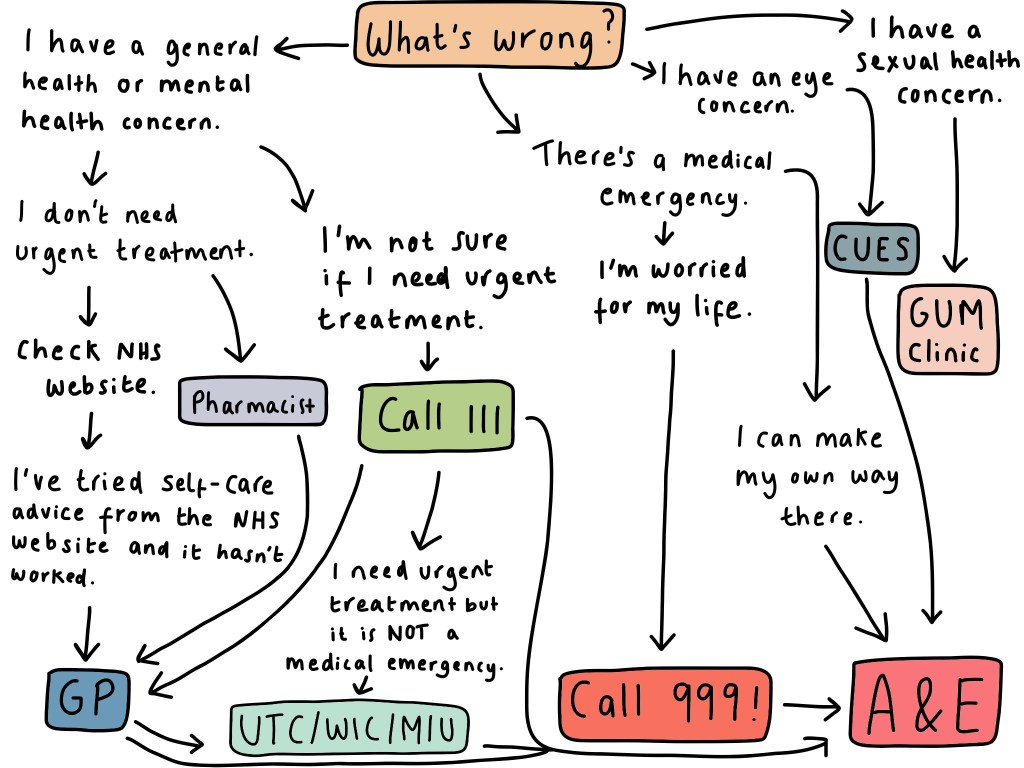
Different NHS services are available depending on your health need. This is beyond the scope of this article, but see the earlier post ‘Navigating the NHS: The Ultimate Guide to the UK’s Healthcare System’ for more. Here is an infographic I made for this article which summarises how to best access services within the NHS:
TIP: If you need an interpreter or communication support, it’s important to let your HCP know well in advance to arrange this.
2. Understand Why You’re Going
Before your appointment, take a moment to reflect on why you’re visiting your HCP. What symptom(s) are you experiencing? Identifying your main concerns with help focus your discussion.
Consider keeping a detailed symptom log to make it easier for your HCP to understand your health issues and concerns. Here are some questions they will want to know the answer to:
- What is the main reason for your visit? (e.g., pain, fatigue)
- How long have you had each symptom? Have they changed over time?
- Does anything make the symptom better or worse?
- Are there any patterns that you’ve noticed? (e.g.m is the symptom worse at a certain time of day?)
- What have you tried so far to help with it? Has anything worked?
- Have you experience this before?
TIP: If you have multiple symptoms and want to see your GP, you may need to book a double appointment or multiple appointments to ensure there’s enough time to discuss each concern. GP appointments are short (10 minutes!), and each symptom deserves focussed attention. Be sure to inform the receptionist when booking if you think you may need more time.
3. Review Your Medical History
Your HCP needs to know more than just the current issue, as this can help them connect the dots between past conditions, current symptoms, and potential treatment options. Things to note:
- Any previous diagnoses, operations or hospital admissions.
- Chronic health conditions (e.g., diabetes or high blood pressure) – how well controlled are they?
- Allergies.
- Family history of major health conditions (e.g., genetic disorders or cancer),
4. List All Medications
It’s essential to bring a list of any current medications you are taking. This should include:
- Repeat prescriptions.
- Over-the-counter medications e.g., paracetamol
- Supplements, e.g., St John’s Wort.
Your HCP may also want to know:
- Are you taking your medications as prescribed?
- Have you missed any doses?
- Any recent changes to your medications? (e.g., changes in dosage, frequency and ones that’ve been started/stopped).
Knowing what you’re taking helps your HCP avoid any drug interactions and tailor treatments to you more effectively.
5. Be Open and Honest About Your Health
Your HCP is there to help, not to judge. It’s a good idea to be open and honest about things, even if it feels embarrassing to you. Whether it’s stress, mental health, or lifestyle habits, the more information you provide, the better your HCP can guide your treatment.
Being open about your social circumstances can give early clues to the presence of diseases, especially ones that can be influenced by lifestyle factors. It also helps your HCP to assess how certain medical conditions may impact on your life.
Important topics your HCP may ask about:
- Mental health struggles you are facing.
- Recent stress or major life changes that may be affecting your health.
- Lifestyle habits.
- Do you drink any alcohol? How much?
- Do you smoke? How much, and for how long?
- Do you take recreational drugs?
- Your living situation.
- Who do you live with?
- Do you have any help at home e.g., for carers? If so, what do they help with, and what can you do for yourself?
- Your occupation.
6. Write Down Your Concerns and Questions
HCPs often need to cover a lot of ground in a short space of time, so it can be easy to forget your key questions. Writing them down in advance is always a good idea, so that you don’t leave feeling uncertain.
Also, clearly communicate your expectations for the appointment – what would you like to happen going forward? This will help reduce the likelihood of leaving the appointment feeling dissatisfied, or feeling as if your needs haven’t been met.
On The Day Of Your Appointment
1. Arrive Early
Plan your journey to ensure you arrive on time. Are you well enough to drive? Do you need a lift, or can you use public transport? Planning ahead prevents delays and ensures you get the care you need.
Aim to arrive at least 15 minutes before your appointment. HCPs usually have tight schedules, so even being a few minutes late can cause you to miss your chance to be seen.
2. Dress Appropriately
It’s a good idea to wear loose-fitting, comfortable clothing that you can easily remove if necessary. Your HCP may need to perform a physical exam, so dressing appropriately makes this process smoother.
3. Come Prepared
It can be helpful to bring a notepad to take notes, or consider bringing a family member or friend with you to help you remember key points – your HCP will likely provide a lot of information in a short period of time.
Additionally, ensure that you bring any important health records and documents with you, especially if you’re seeing a new HCP. This may include referral letters or a recent hospital discharge summary, for example.
During Your Appointment
1. Start With Your Main Concern
At the beginning of your appointment, be clear about your primary reason for visiting. Whether you’re experiencing new symptoms, or seeking advice on managing a current condition, start by sharing your main concern upfront.
TIP: Summarise your main concern into a simple statement to ensure your HCP understands right away. For example, “I’ve been experience headaches daily for the last three weeks”.
2. Seek Clarification if Needed
Don’t hesitate to ask for clarification if you don’t understand something. Medical jargon can be overwhelming, and it’s important that you feel confident about any recommended tests or treatments.
If your HCP suggests a test or treatment, here are some questions you can ask:
- What are the benefits?
- What are the risks?
- Are there any alternatives?
- What would happen if we do nothing?
3. Ask About The Next Steps and Follow-up
Before leaving, make sure you fully understand the next steps. Will you need to schedule a test yourself, or make any further appointments? If so, how do you go about it?
TIP: Ask for a clear timeline. When should you expect the results? When should you expect to see the specialist you have been referred to?
4. Advocate for Your Health
If you don’t feel that your concerns are being addressed, or if you don’t agree with the proposed plan, be sure to speak up. You are also entitled to a second opinion if necessary. Your healthcare is a partnership, and your voice matters.
Final Thoughts
Preparation is key to making the most of your healthcare appointment. By understanding what information your HCP needs to know, asking the right questions, and advocating for your needs, you will help your HCP help you ensuring you leave feeling confident, informed, and empowered to make decisions about your care.
Remember, the doctor-patient relationship is a partnership, and your health should always be the priority. Don’t be afraid to speak up, clarify things you don’t understand, and ensure that you leave with a clear plan!
How do you prepare for your healthcare appointments? Is there anything else that you feel is important for other readers to know? Leave a comment down below!
References
https://drsadeydancy.nhs.uk/how-to-prepare-for-a-hospital-appointment
https://www.nhs.uk/nhs-services/gps/what-to-ask-your-doctor/


Leave a Reply