
Did you know that nearly half of adults with hypertension don’t even know they have it?
Hypertension, commonly known as high blood pressure, is a major health concern worldwide, affecting an estimated 1 in 4 adults. Frequently referred to as the “silent killer”, it can develop gradually without noticeable symptoms, making it easy to overlook. Left untreated, it can lead to serious health conditions such as heart attacks, strokes and kidney failure.
The good news? It is manageable, through simple lifestyle changes and medications if necessary too.
In this article, we’ll explore what causes hypertension, how it’s diagnosed, and look at the changes you can make and medications you can take to help lower your blood pressure effectively.
Understanding Hypertension
Blood Pressure Basics
Blood pressure (BP) is a measurement of the force of blood against the walls of your arteries (large blood vessels) as it is pumped around your body. It is determined by:
- Cardiac output (CO): the volume of blood pumped by the heart every minute. The greater this volume, the higher the BP.
- Systemic vascular resistance (SVR): how much your blood vessels resist blood flow. When the blood vessels are narrower and stiffer it is harder for the blood to flow through them, so resistance increases, increasing BP.
When blood vessels become narrower or stiffer (higher SVR), or when the heart has to pump more blood around the body (higher CO), blood pressure rises. Over time, this damages the blood vessel walls, causing fatty deposits to build up (known as atherosclerosis). This narrows the blood vessels walls even more, increasing the risk of complications like heart attacks and strokes.
How is BP Measured?
BP is represented by two numbers. e.g., 120/80 mmHg:
- Systolic BP (top number) – the pressure in the blood vessels as your heart contracts to pump blood.
- Diastolic BP (bottom number) – the pressure in the heart as it relaxes and fills up with blood between beats.
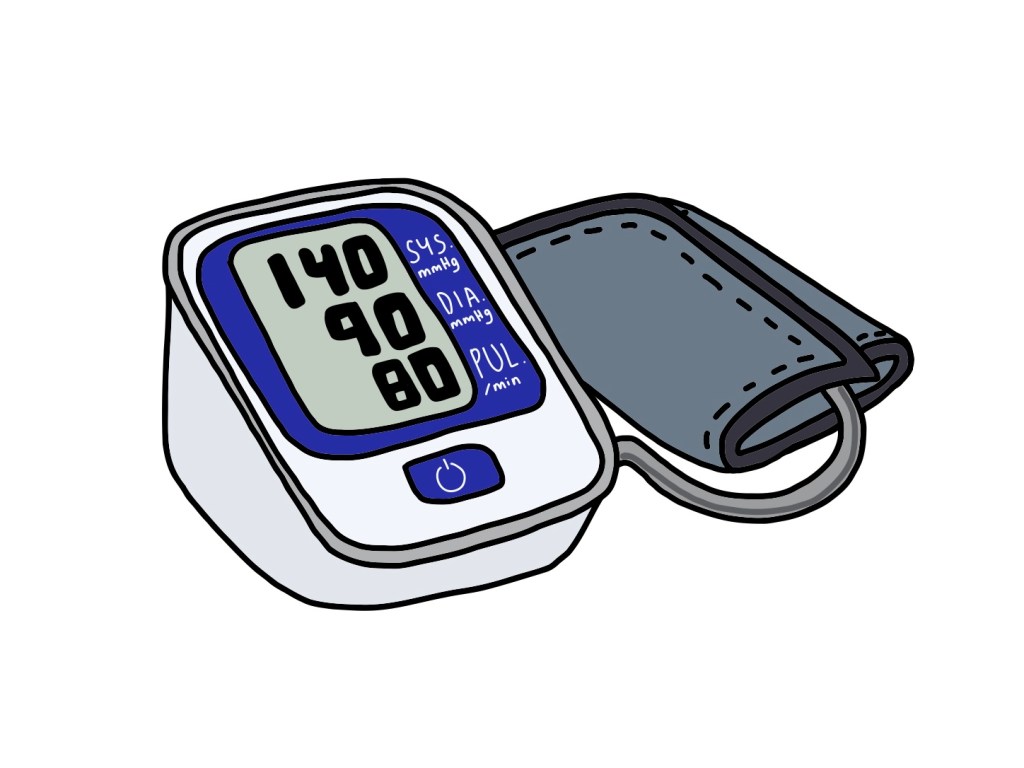
Hypertension is diagnosed when BP is higher than it should be; 140/90 mmHg or higher.
Stages of Hypertension
There are 3 different stages, depending on recordings in clinic or at home:
- Stage 1:
- BP between 140/90 – 160/100 mmHg at the Doctor’s.
- OR 135/85 – 150/95 mmHg at home.
- Stage 2:
- BP between 160/100 – 180/120 mmHg at the Doctor’s.
- OR Over 150/95 mmHg at home.
- Severe hypertension:
- BP over 180/120 mmHg. This requires immediate medical attention.
Types of Hypertension
It is classed as either primary or secondary:
- Primary hypertension: occurs in 90% of people, and is where there is no identifiable cause. It tends to develop over many years due to factors such as drinking alcohol, being overweight or obese, smoking, and having a diet high in salt.
- Secondary hypertension: occurs due to an underlying medical condition. It is more likely in people <40 years old, or if BP worsens suddenly. Examples include:
- Sleep apnoea
- Endocrine disorders e.g., hyperthyroidism
- Kidney disease
“White-coat” hypertension refers to BP that is raised in a clinical setting, but is normal when at home or in a less stressful environment. This will be confirmed by asking you to take several readings at home over at least 7 days – your Doctor will review the readings, and can confirm white-coat hypertension if there is a significant difference between them.
- Typically your at-home readings will be used to assess whether you may need medications.
Risk Factors for Hypertension
Hypertension is often the result of a combination of multiple risk factors, including:
- Genetics: Family history of hypertension increases your risk.
- Age: BP tends to rise as you get older.
- Chronic stress and anxiety: Stress hormones like adrenaline and cortisol can narrow your blood vessels, raising BP.
- Ethnicity: People of black African and black Caribbean descent are at higher risk.
- Medications e.g., combined contraceptive pill (COCP), non-steroidal anti-inflammatory medications (NSAIDs) such as ibuprofen.
- Certain chronic health conditions e.g., diabetes, high cholesterol or kidney disease
- Lifestyle factors:
- Diet: high in salt (causing your body to retain fluid which increases the volume of fluid circulating in your blood) and processed/fatty foods (causing fatty plaque build up in blood vessel walls which narrows them).
- Being overweight or obese.
- Sedentary lifestyle.
- Smoking.
- Drug use e.g., cocaine and amphetamines.
Signs and Symptoms of Hypertension
You may have hypertension and feel fine, as it develops gradually over time (hence the term “silent killer”). You may not feel any different until severe complications arise, such as a heart attack or stroke. However, very high BP can cause symptoms such as:
- Blurred vision
- Headaches
- Chest pain
- Dizziness
- Nausea or vomiting
- Confusion
- Nosebleeds
If you experience any of these, seek urgent medical attention. Early detection is key to diagnosis and preventing complications.
See below this video of Cecilia’s story. She talks about how she had overlooked the warning signs of having hypertension, and unfortunately was only diagnosed after having a stroke. Her story is not uncommon, but shows the importance of early detection.
Diagnosing Hypertension
Several tests can be used to help diagnose hypertension, and to look for an underlying cause:
- BP Monitoring: If your BP is high when you see your Doctor, you’ll likely be asked to monitor your BP at home over a period of at least 7 days. If you are known to have hypertension, you will have your BP checked by your Doctor at least once a year.
- If your BP readings at home are variable/unstable, 24-hour BP monitoring (ambulatory blood pressure monitoring (ABPM)) may be arranged for more accurate readings.
- Blood Tests: To look for any secondary causes, for any other factors that may contribute to hypertension, or to assess for any damage to the organs. You will have a blood test when hypertension is first diagnosed, then at least yearly.
- These may include: kidney function, electrolytes, cholesterol levels, HbA1c (for diabetes), and thyroid function tests.
- Urinalysis: A urine test can be useful in detecting kidney issues or signs of conditions like diabetes, which can increase the risk of hypertension. This is performed on diagnosis, then once yearly.
- Electrocardiogram (ECG): An ECG checks your heart’s electrical activity, and may show signs of strain on the heart due to hypertension. This will be performed on diagnosis, and will likely be repeated every few years.
Most pharmacies offer free BP checks for people aged over 40. Find a pharmacy near you using the following link:
https://www.nhs.uk/service-search/pharmacy/find-a-pharmacy-that-offers-free-blood-pressure-checks
Some employers also offer BP checks – reach out to your employer if you’re concerned to see if this is something they can offer you.
A Holistic Approach to Managing Hypertension
Managing hypertension is about more than just medication. In this section, we’ll cover how it can be effectively treated from a holistic approach.
1. Diet and Nutrition
A healthy and balanced diet plays a crucial role in lowering BP, and reducing the risk of complications.
One popular eating plan is the DASH Diet (Dietary Approaches to Stop Hypertension), developed in the US in 1995. This focuses on:
- Reducing saturated and trans fats: these raise levels of ‘bad’ (non-HDL) cholesterol in the blood, which increases the risk of cardiovascular disease.
- Increasing potassium, calcium and magnesium: some studies suggest that these nutrients can help reduce BP, although evidence overall is mixed.
- Eating more fibre: Fruits, vegetables, and whole grains are all high in fibre, which helps lower BP.
- Limiting salt intake: this is essential in managing BP, as a high salt diet increases the volume of fluid in our blood (hence increases the cardiac output).
If you’re interested in finding out more about the DASH eating plan and for DASH-friendly recipes, click this link: https://healthyeating.nhlbi.nih.gov
2. Exercise
Regular physical activity is one of the most effective ways to control blood pressure. The goal should be at least 150 minutes of moderate-intensity activity per week (e.g. brisk walking, dancing, or cycling), or 75 minutes of vigorous intensity exercise (e.g., running or swimming), spread evenly over 4-5 days. Strengthening exercises, such as weight lifting, should also be done at least twice a week.
3. Stress Management
Stress can increase your BP temporarily due to the release of “fight or flight” hormones like adrenaline – these make your heart beat faster and narrows your blood vessels. Repeated rises in blood pressure, for example in chronic stress, is suggested to play a contributing role in the development of hypertension.
Managing stress is therefore an essential part of preventing hypertension. Some helpful techniques include:
- Mindfulness and Meditation: Practicing mindfulness can reduce anxiety and improve overall emotional well-being, alongside helping to lower BP. See the video below for a guided medication specifically aimed at helping you relax to lower your BP.
- Deep Breathing: Techniques like diaphragmatic breathing or box breathing are useful in acute stress, helping to lower your heart rate and BP. See the two videos below for examples on how to practice these.
- Progressive Muscle Relaxation: This technique involves slowly tensing and relaxing different muscle groups in the body, helping to release physical tension and lower BP. This video below talks you through how to do this:
4. Sleep Hygiene
Getting good quality sleep is essential for regulating your BP. Poor sleep, and conditions like sleep apnoea – where your breathing temporarily stops during sleep – can cause your BP to spike.
Improving your sleep hygiene helps to reduce the risk of hypertension. See our previous article on The Impact of Sleep on Our Health: Why Prioritising Rest is Essential for more tips on how to improve your sleep.
5. Weight Management
Maintaining a healthy weight is essential for managing hypertension. For example, research discussed at the American Heart Association conference in 1998 suggested that at least 2/3 of the prevalence of hypertension can be directly attributed to obesity.
Focus on gradual, sustainable changes through eating a balanced diet and regular physical activity, as this will help you maintain a healthy weight long term.
6. Other Lifestyle Changes
- Quit smoking: this damages blood vessels and increases BP, as well as being a risk factor for many other health conditions.
- Limit alcohol: the more alcohol you drink too, the higher the risk of developing hypertension.
- Drinking in moderation (no more than 14 units a week) helps reduce the risk of adverse effects from drinking. This equates to 6 pints of beer a week, or 6 medium glasses of wine.
7. Medications for Hypertension
Sometimes, lifestyle changes alone aren’t enough to effectively manage hypertension, and medication may be necessary. Common prescribed medications include:
- ACE Inhibitors (e.g., Ramipril, Lisinopril) or ARBs (e.g., Losartan) for people under 55 or those with type 2 diabetes.
- Calcium Channel Blockers (e.g., Amlodipine) for people over 55 or of African or African-Caribbean descent.
- Thiazide-like diuretics (e.g., Indapamide) may be added if BP remains high.
- Additional Medications: If BP is still uncontrolled, doctors may consider adding drugs like Spironolactone or Doxazosin, or specialist advice may be sought.
Most people with hypertension will be reviewed annually. You may be reviewed more frequently if you have type 1 diabetes, chronic kidney disease, or if you are pregnant/considering pregnancy or breastfeeding.
BP Targets
- For people <80 years old, aim for BP below 140/90 mmHg in clinic (or below 135/85 mmHg at home).
- If >80 years old, aim for BP below 150/90 mmHg (or below 145/85 mmHg at home).
Hypertension Complications
If left untreated, hypertension can lead to serious complications, including:
- Cardiovascular disease:
- Heart attacks – where the blood supply to the heart is cut off.
- Strokes – where the blood supply is cut off to part of your brain.
- Heart failure – where the heart isn’t working as well as it should, so it can’t pump blood around the body properly.
- Vascular dementia – where blood flow to the brain is reduced which damages and kills of brain cells. This creates problems with certain thought processes e.g., memory.
- Peripheral arterial disease – where blood supply to the muscles in the legs is restricted.
- Kidney disease.
- Hypertensive retinopathy – damage to the eyes resulting in vision loss.
In Summary
Hypertension is a common health condition with serious risks, but with the right approach, it can be managed effectively. By making lifestyle choices as detailed above, and by working with your healthcare provider, you can take control of your BP and improve your overall health.
If you’re concerned about your BP and haven’t had it checked recently, make an appointment today or visit your local pharmacy for a free check. If your readings are higher than normal, don’t wait – consult with your Doctor, as they can help you create a management plan that works specifically for you. Remember the sooner you take action, the better the outcome!
I’d love to hear your thoughts – whether it’s your own personal experience, or whether you have any advice on how to live well with hypertension, please leave a comment down below!
Further Resources
If you, or someone you know, has been diagnosed with hypertension, you may find the resources below useful.
For more information on hypertension from the World Health Federation, click the link below:
Blood Pressure UK – a UK based charity that works to help reduce the risk of hypertension-related complications: https://www.bloodpressureuk.org
A comprehensive article on hypertension from the NHS website, with clear signposting on when to seek medical attention: https://www.nhs.uk/conditions/high-blood-pressure/
For more information and support on hypertension and other heart-related disease, visit the British Heart Foundation: https://www.bhf.org.uk/informationsupport

 The Health and Healing Narrative
Leave a reply to If Santa Came to Clinic: A Claus for Concern – The Health and Healing Narrative Cancel reply