
From ultramarathon races and hiking expeditions up Kilimanjaro, to outdoor festivals such as LoveTrails, working with Trailmed, a UK-based events medical company, means I’ve helped look after people from all walks of life in various conditions. What is consistently striking, though, is how often heat-related illness catches people out — even experienced athletes who are well prepared and well trained, and at times even medics themselves.
In the UK, the moment the sun appears, we make the most of it. Think shorts and T-shirts, beer gardens, barbecues, and long days outdoors — a quintessentially British response to warm weather. And rightly so, given how few sunny days we get each year. But alongside the enjoyment, there is a predictable and often underestimated medical risk.
Heat-related illness still causes a significant number of deaths every year. In the summer of 2025, there were an estimated 1,504 heat-associated deaths in England alone across five heat episodes, with the highest mortality rates in adults aged over 85 years. Importantly, illness is not confined to heatwaves. It can occur at surprisingly modest temperatures, particularly during prolonged exertion such as endurance running or sustained activity at outdoor events.
Heat-related illness exists on a spectrum. At one end are mild, self-limiting conditions. At the other is heat stroke: a medical emergency requiring immediate treatment, without which it can be fatal.
Whether you are lining up at the start of an ultramarathon this summer, dancing the night away at a festival, or simply basking in the sun on a warm day with an Aperol in hand, understanding how heat illness develops — and how to prevent it — can help save lives.
Contents
- Why do we get heat-related illness?
- The spectrum of heat-related illness
- Prevention of heat-related illness
- In summary
DISCLAIMER:
While I am a practising doctor, the information on this site is for educational purposes only. It does not take into account your personal circumstances, which can significantly affect medical decision-making and treatment. This content therefore does not constitute medical advice, and should not be relied upon for diagnosis or treatment. Always consult a qualified healthcare provider regarding any health concerns.
This article was published on the 15/06/2026 using up-to-date sources at that time. Please be aware that medical information and guidelines change often.
Why do we get heat-related illness?
Our bodies work continuously to keep internal temperature within a narrow range — a process known as thermoregulation. We generate heat simply by being alive, and this increases further during exercise. We can also absorb heat from the environment, particularly in hot weather or direct sunlight.
Normally, the body regulates temperature by widening blood vessels in the skin and moving heat towards the skin surface, sweating, and losing small amounts of heat through breathing. However, when heat production or absorption exceeds the body’s ability to lose heat — especially in hot, humid conditions or during prolonged exertion — these systems become overwhelmed. Sweat also becomes less effective because it cannot evaporate efficiently. As a result, core temperature begins to rise.
At first, this may cause relatively mild symptoms such as heat rash or muscle cramps. As temperature increases further, dehydration and widening of blood vessels can reduce blood flow to vital organs, particularly the kidneys and gut. Ongoing heat stress can also trigger widespread inflammation and cause direct cellular injury at very high temperatures (typically above 42°C). In severe cases, this progresses to multi-organ dysfunction — a life-threatening condition called heat stroke.
The spectrum of heat-related illness
Heat rash
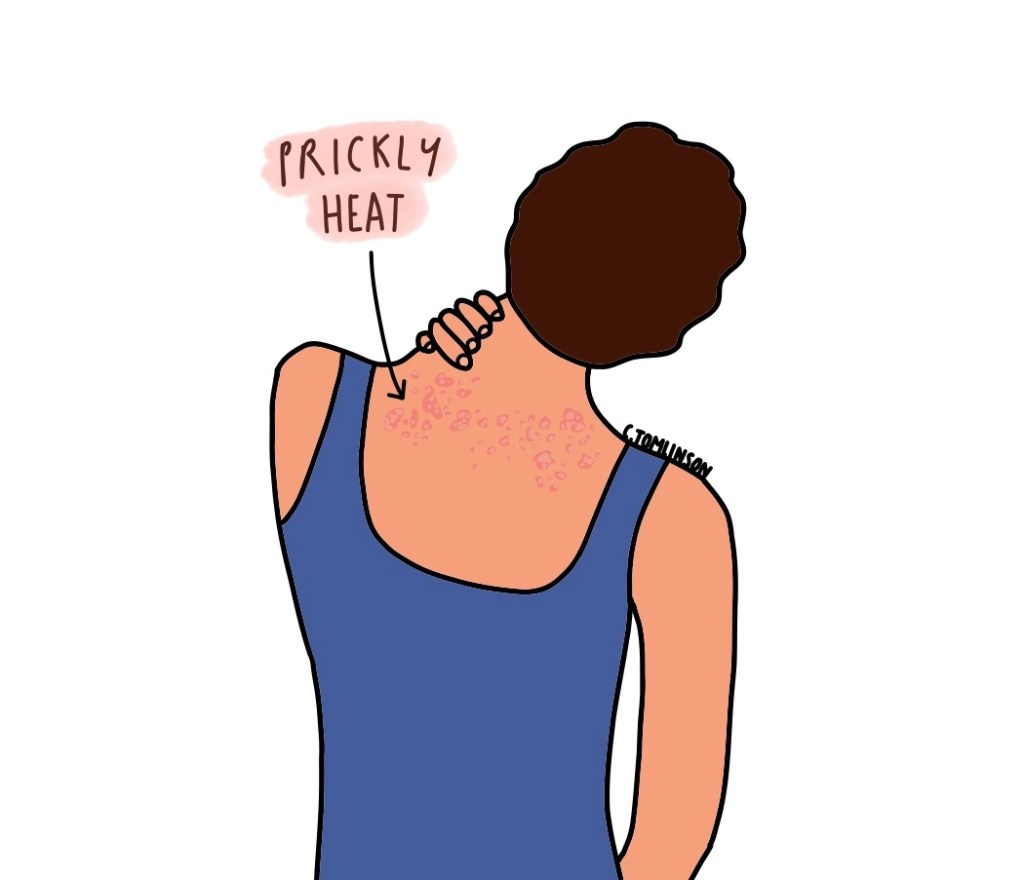
Heat rash, also known as “prickly heat” or “miliaria“, occurs when sweat ducts become blocked, trapping sweat beneath the skin. It presents as small clusters of itchy red bumps or tiny blisters, which may appear lighter or greyish in darker skin tones. It most commonly affects the neck, chest, groin, and skin folds.
It is particularly common in babies, during hot and humid weather, after vigorous exercise, during febrile illnesses, and in situations where heat and moisture are trapped against the skin — such as tight or non-breathable clothing, occlusive dressings, or prolonged bed rest.
Most cases settle within 24-48 hours once the skin is kept cool and sweating is reduced. Helpful measures include moving to a cooler environment, wearing loose breathable clothing, changing out of wet clothing promptly, avoiding harsh soaps or irritants, and using cool baths or compresses. Calamine lotion may help reduce itching.
Medical advice should be sought if the rash becomes increasingly painful, spreads, develops warmth or swelling, or shows signs such as yellow crusting, pus, or discharge. Fever or feeling unwell may suggest secondary infection and should prompt assessment. People should also be alert to symptoms of more significant heat illness, including heat exhaustion.
Heat oedema
Heat oedema is swelling of the hands, feet, and ankles that can occur in hot weather. It results from dilation of blood vessels in the skin, which allows fluid to shift into surrounding tissues, often worsened by gravity.
Although it can look concerning, it is usually harmless and resolves with limb elevation, gentle movement, and acclimatisation to heat. Persistent or one-sided swelling should be assessed to exclude other causes, particularly in those with underlying heart disease.
Heat cramps
Heat cramps are painful, involuntary muscle spasms that usually affect large muscle groups such as the calves, thighs, shoulders, or abdomen. They typically occur after prolonged physical activity in hot conditions and are linked to fluid and salt loss through sweating.
Although often mild, they may be an early warning sign of heat exhaustion. Anyone experiencing heat cramps should stop activity, move to a cool environment, and rehydrate. Stretching and gentle massage may help. Symptoms such as dizziness, nausea, headache, or marked fatigue suggest progression and require closer attention.
Heat syncope
Heat syncope refers to fainting or a brief loss of consciousness during exposure to heat. It often occurs after prolonged standing, especially in crowded environments, during early heat exposure before acclimatisation, or immediately after exercise.
In hot conditions, blood vessels widen to release heat from the body. Combined with dehydration, this reduces blood return to the heart and lowers blood pressure. As a result, less blood reaches the brain, leading to symptoms such as dizziness, blurred vision, nausea, sweating, weakness, and occasionally fainting.
Most people recover quickly when laid flat in a cool environment with legs elevated. Fluids can be given if the person is fully alert to help cool them down.
However, not all collapse in heat is benign. Urgent medical assessment is needed if recovery is delayed or if there is chest pain, palpitations, shortness of breath, seizure activity, persistent confusion, or significant injury. Recurrent episodes or collapse in older adults or those with cardiovascular disease should be reviewed by a medical professional.
Rhabdomyolysis
For clinicians, rhabdomyolysis is not exclusively a heat-related condition, but exertional rhabdomyolysis — occurring after intense physical activity — is strongly associated with heat exposure and dehydration.
It occurs when skeletal muscle breaks down rapidly, releasing muscle cell contents into the bloodstream. It can follow unaccustomed or prolonged exercise, particularly in hot weather, but also occurs after trauma (such as a fall with a “long lie” — where an individual is on the floor for 1 hour or more), certain medications (including statins), infections, or substance use.
Patients typically present with severe muscle pain out of proportion to expected exertion, swelling, and weakness. A classic but not always present feature is dark “cola-coloured” urine due to myoglobin in the urine.
The main concern is acute kidney injury, which can develop when muscle breakdown products overwhelm the kidneys, particularly in the context of dehydration.
A high index of suspicion is needed in athletes, military personnel, manual workers, and anyone undertaking strenuous activity in hot conditions. Early recognition, rest, cooling, and prompt medical treatment with intravenous fluids are essential to protect kidney function.
Heat exhaustion
Heat exhaustion occurs when the body can no longer keep up with fluid loss and rising temperature, but before severe organ failure develops. It sits on the spectrum between mild heat illness and heat stroke, and should be treated as a warning sign of potential deterioration.
It typically develops after prolonged heat exposure, especially during physical activity, inadequate fluid intake, or high humidity. People who are not yet acclimatised to warm weather are particularly at risk.
Symptoms include heavy sweating, intense thirst, headache, dizziness, nausea, muscle cramps, weakness, and fatigue. The skin is often cool and clammy, and mental function is usually preserved, although mild confusion or irritability can occur. Core temperature is typically elevated but below 40°C.
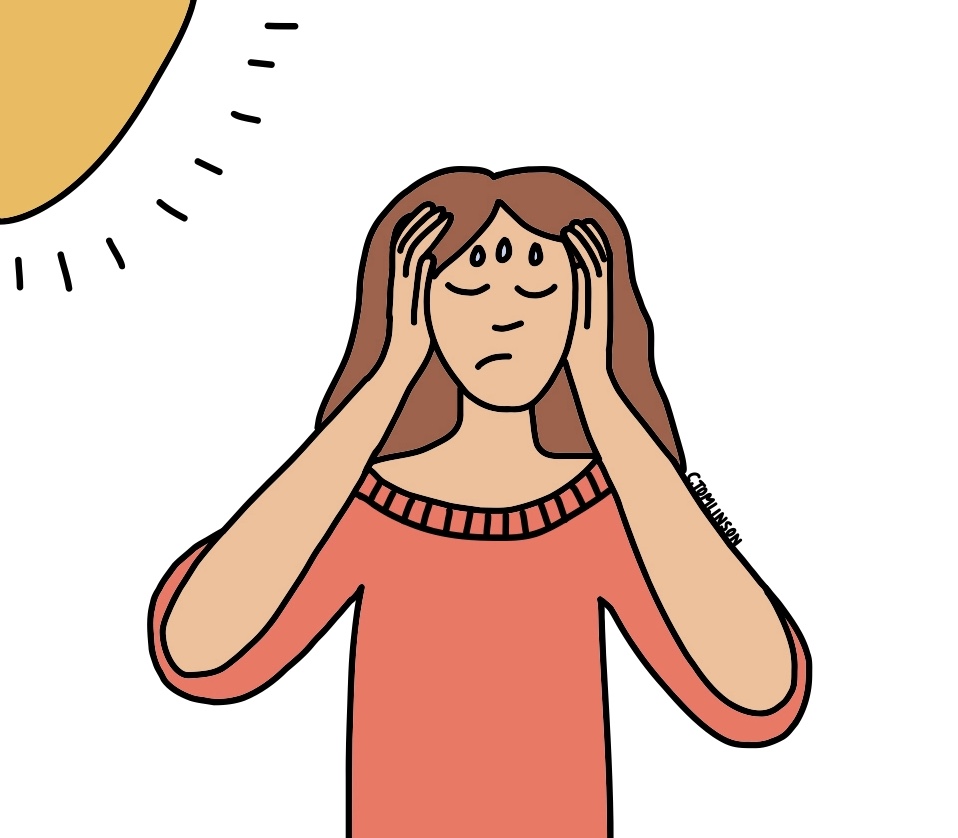
Treatment focuses on rapid cooling and rehydration. The person should stop activity immediately, move to a cool environment, lie down, and have clothing loosened. Cooling can be achieved using fans, cool water, or ice packs. Oral fluids are appropriate if the person is fully alert and not vomiting, ideally including electrolytes.
Most people improve quickly with treatment. However, if there is no improvement within 30 minutes, or if there is any deterioration in consciousness (including increasing drowsiness or confusion), urgent medical assessment is required. Advice can be sought in the UK via 111 at any time.
Heat stroke
Heat stroke is the most severe form of heat-related illness and a medical emergency. It occurs when thermoregulation fails completely, leading to a dangerous rise in core temperature and injury to multiple organ systems.
It is defined by a core temperature typically above 40°C, together with central nervous system dysfunction.
Symptoms may include confusion, agitation, nausea or vomiting, disorientation, behavioural change, slurred speech, seizures, or loss of consciousness. In exertional heat stroke (i.e due to exercise), sweating may still be present, whereas in environmental heat stroke (i.e due to hot weather/climate) the skin is often hot and dry.
Emergency services must be contacted immediately by calling 999 (UK).
While awaiting help, cooling must begin straight away. The most effective method in most settings is evaporative cooling: removing excess clothing, spraying the skin with cool or tepid water, and using fans to enhance heat loss. Ice packs to the neck, armpits, and groin or cooled intravenous fluids may be used where available in pre-hospital or event settings.
The aim is rapid cooling, not restoration of normal temperature. Overcooling can occur if treatment continues unchecked, leading to hypothermia. Cooling is typically paused once core temperature approaches 38.5°C, with monitoring for rebound hyperthermia.
Shivering may occur and is counterproductive, as it generates heat. In hospital settings, benzodiazepines may be used to reduce shivering and manage agitation or seizures.
Once in hospital, care focuses on stabilising breathing and circulation while continuing controlled cooling. Heat stroke is a multi-organ emergency, and patients usually require urgent blood tests and close monitoring of kidney, liver, and clotting function. Many require admission to intensive care for ongoing cooling, cardiovascular support, and management of complications such as kidney injury or metabolic disturbance.
Prevention of heat-related illness
Most heat-related illness is preventable, so prevention is key, particularly for anyone taking part in an endurance event this summer.
1) Stay hydrated
Drink cold fluids regularly throughout the day, especially if you are active. Don’t wait until you feel thirsty, as this can be a later sign of dehydration.
Water is usually enough for most people, but during prolonged exercise or heavy sweating, electrolyte-containing drinks can help replace lost salts.
Limit alcohol in hot weather, as it increases dehydration and can reduce awareness of early symptoms.
2) Dress appropriately
Wear light-coloured, loose-fitting, breathable clothing to help the body lose heat more effectively.
It’s also important to protect your skin from UV exposure by using adequate sun protection, including regular application of SPF, particularly during prolonged time outdoors. You can read more about this in our guide on sun safety and melanoma prevention here.
3) Plan your activity
Avoid strenuous activity during the hottest part of the day (11am–3pm) where possible. High-intensity exercise in extreme heat should be avoided or adjusted, particularly before you are acclimatised.
4) Keep your environment cool
At home, close curtains in direct sunlight and use ventilation when the outside air is cooler than indoors. If it is hotter outside, keep windows closed.
Turning off unnecessary electrical devices and lights can also help reduce indoor heat.
In summary
Heat-related illness is often underestimated, but it is both predictable and largely preventable. Most cases sit on a spectrum that begins with mild symptoms and, if not recognised early, can progress to life-threatening heat stroke.
The key is early recognition and early action. Don’t ignore symptoms such as dizziness, headache, nausea, or unusual fatigue — and don’t assume they will simply pass, either. If you are unsure what to do, contact your GP or call 111 for advice. If there are signs of heat stroke, this is a medical emergency and you should call 999 immediately. At organised events, medical teams are usually on site, so make sure you know how to reach them if needed.
If you’ve found this useful, or know someone heading to an endurance event or festival this summer, it’s worth sharing — heat-related illness is far easier to prevent than it is to treat.
 The Health and Healing Narrative
Leave a comment