
For many people living with endometriosis, the road to diagnosis is long and difficult. Despite affecting around one in ten women and people assigned female at birth of reproductive age, it takes an average of more than nine years to receive a diagnosis. During this time, symptoms can have a profound impact on education, work, relationships, fertility and overall quality of life.
This month, the National Institute for Health and Care Excellence (NICE) announced draft recommendations for two new technologies that could help identify endometriosis earlier. While these tests are not intended to replace existing diagnostic pathways, they represent an encouraging step towards faster diagnosis and earlier access to treatment.
What is endometriosis?
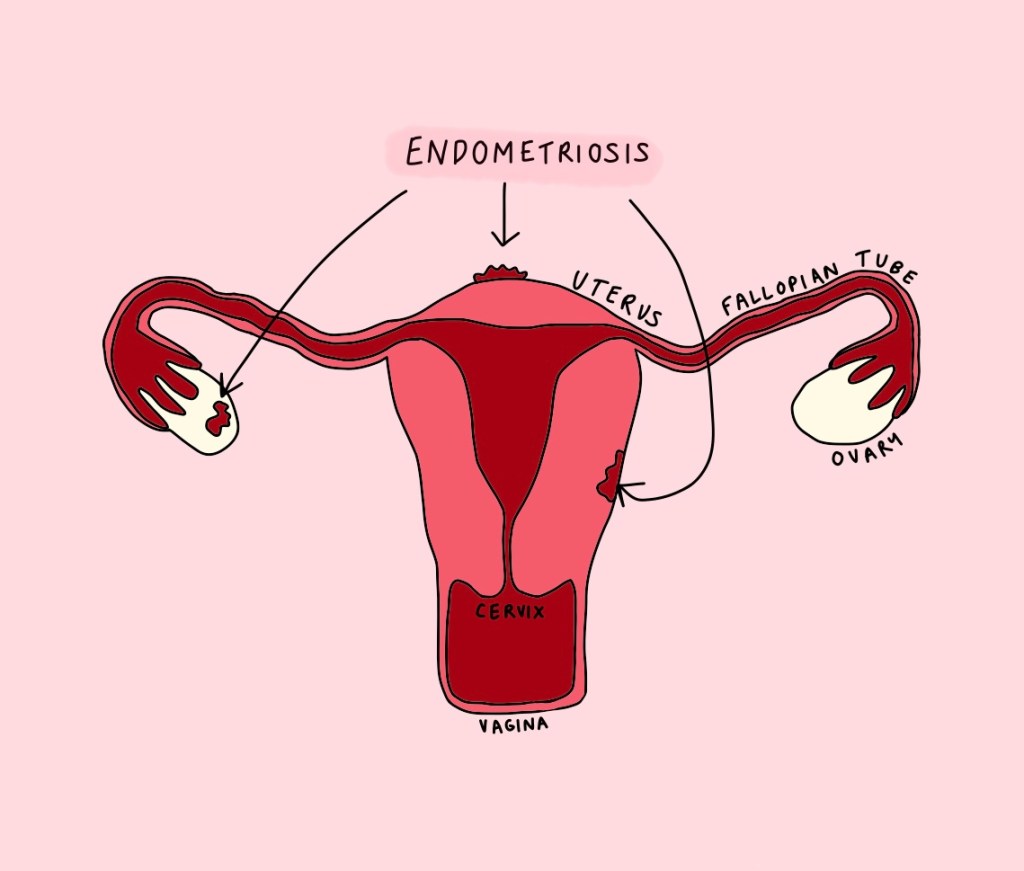
Endometriosis occurs when endometrial tissue, the tissue from the lining of the uterus (womb), grows outside of it – commonly in the ovaries, fallopian tubes, and pelvis. Although there is currently no cure, a range of treatments can help manage symptoms and improve quality of life.
Common symptoms and signs include:
- pelvic pain
- painful periods (dysmenorrhoea)
- pain during sex, particularly pain felt deep in the pelvis (dyspareunia)
- bowel/bladder symptoms
- infertility
Why does diagnosis take so long?
There are several reasons for this. Firstly, symptoms vary considerably and often overlap with those of other conditions, such as irritable bowel syndrome (IBS), fibroids, adenomyosis and bladder pain syndrome. As a result, these conditions are often investigated first.
Secondly, diagnosing endometriosis remains challenging. While ultrasound and MRI can detect some forms of the disease, they cannot identify every type, and a normal scan does not rule it out. Laparoscopic (keyhole) surgery is considered the gold standard for diagnosis, but even during surgery, lesions can be difficult to recognise because they vary greatly in appearance. Although clinicians are increasingly able to diagnose endometriosis based on symptoms, examination and imaging, surgery may still be needed when uncertainty remains or treatment is required.
Awareness also remains a barrier. Painful periods are often dismissed as ‘normal’ by both the public and healthcare professionals, meaning people may delay seeking help or have their symptoms overlooked. Societal stigma surrounding menstrual and pelvic health can further discourage people from discussing their symptoms or accessing care promptly.
Pain that regularly prevents you from going to school or work, exercising, socialising or carrying out your normal daily activities is not a normal part of menstruation and should be assessed by a healthcare professional.
What has NICE announced?
The National Institute for Health and Care Excellence (NICE), which develops evidence-based guidance for the NHS, has published draft recommendations for two new diagnostic technologies that could help speed up the diagnosis of endometriosis.
Under the draft guidance, the tests – EndoSure and EndoTest – would be introduced through a managed access programme across the NHS in England and Wales over the next three years. This means they could be used in clinical practice while further evidence is collected to assess how well they perform. If shown to be effective, they could become part of the routine diagnostic pathway for endometriosis.
The first technology, EndoSure, is a non-invasive test that uses adhesive sensor pads placed on the abdomen to record electrical activity in the bowel. Before the test, patients fast for 6-8 hours and then drink water until their bladder is comfortably full. The assessment takes around 45 minutes and aims to identify patterns that may be associated with endometriosis.
The second technology, EndoTest, is a saliva-based test that analyses molecules called microRNAs. These molecules regulate gene expression and may serve as biomarkers for endometriosis, offering a simple and non-invasive way of identifying people who may have the condition.
These technologies could be used in primary care, allowing GPs to support earlier investigation while patients await specialist gynaecology assessment. Given that referrals can take several months, earlier investigation could help reduce delays and support more informed specialist management.
It is important to note that neither test is intended to be used as a standalone diagnostic tool. Instead, they are designed to support clinical assessment in people with suspected endometriosis, particularly when imaging is normal, inconclusive or cannot be performed, helping clinicians identify those who may benefit from earlier referral and treatment.
NICE also evaluated a third technology, DotEndo, but concluded that there is not yet enough evidence to recommend its use in clinical practice.
In summary
While these technologies are not a cure for the challenges surrounding endometriosis diagnosis, they offer hope that the journey to diagnosis may become shorter for future patients. Combined with greater awareness, earlier recognition of symptoms and continued research, they could represent an important step towards improving the care of people living with endometriosis.
Want to learn more?
If you’d like to learn more about endometriosis, including how it is currently treated and some of the exciting research that could shape its future, take a look at our previous article, Women’s Health Matters: Promising Advancements in Endometriosis Research.
I’d love to hear your thoughts
- Do you think non-invasive tests like EndoSure and EndoTest could transform endometriosis diagnosis?
- Were you surprised to learn that it takes, on average, more than nine years to receive a diagnosis?
- If you or someone you know has been affected by endometriosis, what changes do you think would make the biggest difference to improving care?
Let me know your thoughts in the comments below, and don’t forget to share this article if you found it helpful.
 The Health and Healing Narrative
Leave a comment