
This week has been one of those weeks.
In general practice, there are days where everything seems to flow. You have more straightforward consultations, fewer unexpected problems, and you leave feeling like you’ve been able to keep on top of everything.
Other days, every consultation feels complex. Every patient needs more time, more referrals, more investigations. You fall behind, and no matter how hard you try, you can’t catch up. You stay late trying to finish everything, only to return the next day and find yourself in the same position again. You have complex home visits, where you have to make difficult decisions about someone’s care — like deciding when further hospital treatment is unlikely to offer meaningful benefit, and that actually, the kindest course of action is keeping them comfortable, at home.
There are days when I have to remind myself how much of a privilege it is to work in general practice — to meet the patients that I do, and to work alongside the team around me. Not because I forget, but because on the hard days, it is easy to lose sight of what matters.
I had a difficult home visit last week where the focus of care shifted towards keeping a patient comfortable, and I had a wobble afterwards. I cried on my way home from that visit. And then again, in front of one of the lovely senior GPs I work with.
I don’t share this because I think it’s unusual; it isn’t. Anyone working in healthcare will know what it’s like to carry the weight of these difficult decisions, and how hard it can be to switch off after a difficult day in work. I share this because I’m only human, and some days, the weight of being let into people’s lives at their most vulnerable moments catches up with you. On those days, it’s easy to become consumed by everything that still needs doing, instead of remembering why we do it in the first place.
The doctor-patient relationship
But thinking about that visit properly, I keep coming back to the same thing: the relationship between a patient and the person looking after them.
It’s a strange kind of relationship, if you stop to think about it. Patients let us into parts of their lives that many people never see — not just their bodies, but their fears, their families, their homes — and sometimes the things they have never been able to tell anyone else.
That only works because there is trust there, and trust has to run both ways. I think part of my job is not just knowing what to do medically, but being honest — even when the honest thing is harder to say than the hopeful thing.
That’s why I think we still find it so difficult to talk about death. It is the one conversation where that honesty can be hardest to ask for, and hardest to offer.
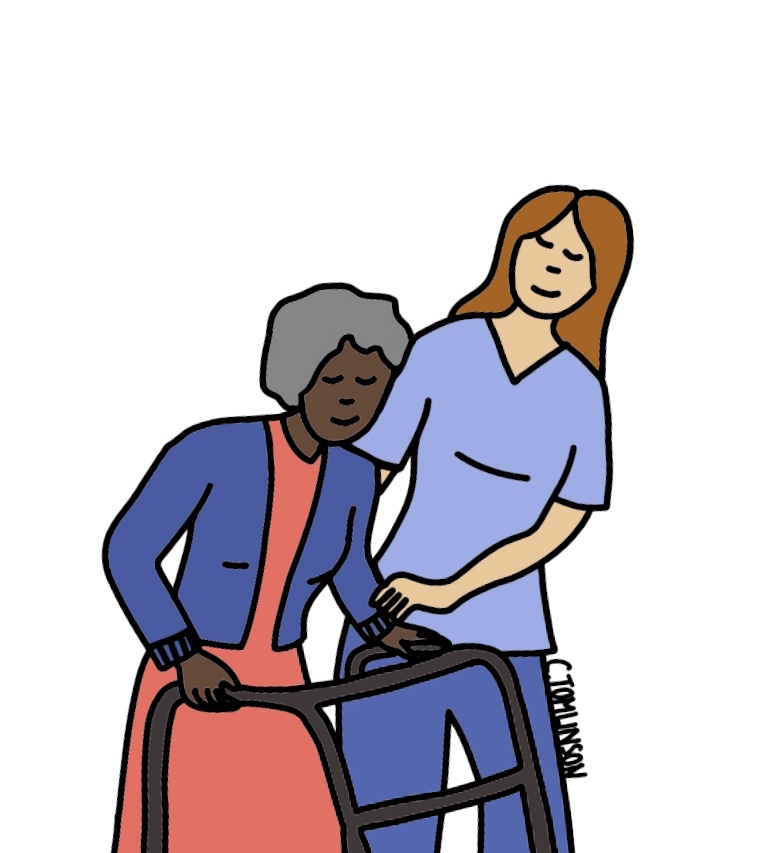
Thinking about mortality
None of us like thinking about our own mortality, or imagining a future where we might lose the ability to make decisions for ourselves.
Patients worry that talking about death makes it more real, or that raising the subject means they have given up hope. Clinicians worry about getting the timing wrong, or having to rush the conversation in a ten-minute appointment with three more patients waiting.
So the conversation gets put off, again and again, until there isn’t a good time left for it. It becomes something that happens in a crisis, in a corridor, between people who may not know each other well and who do not have long to work it out.
But this is exactly what advance care planning is trying to avoid.
The importance of advance care planning
Advance care planning is not about giving up hope.
It is about giving the people who love you the comfort of knowing they are carrying out your wishes, rather than guessing at them. It is about giving clinicians the chance to care for someone in the way they would actually want to be cared for. And it is about making sure your voice is still heard, even if a day comes when you cannot speak up for yourself.
Sometimes that means talking about where you would want to be cared for if you became more unwell. Sometimes it is about what quality of life means to you, or what matters most in the time you have left. Sometimes it is about who you would trust to make decisions on your behalf.
It does not need to be one big conversation, and it does not need to happen all at once. It just needs to happen before it is needed.
Resuscitation and ceiling of care
Nowhere does this matter more than around resuscitation.
I think many people’s idea of cardiopulmonary resuscitation (CPR) comes from television, where it usually works, and someone sits up afterwards looking dazed but otherwise fine. But that is not what it looks like in real life.
For someone who is frail, living with multiple illnesses, or approaching the end of life, CPR is much less likely to achieve the outcome people often imagine. It is not a gentle procedure; ribs can break, and even when it is successful, someone may be left with injuries or a quality of life very different from what they would have wanted.
A decision not to attempt CPR is not a judgement about the value of someone’s life. It is a clinical decision about whether that intervention is likely to achieve an outcome that someone would want. It is also important to remember that a DNACPR decision does not mean someone is for no treatment. It is only a decision about CPR.
The same principle applies to the other decisions that sit alongside it — where someone would want to be cared for, and what they would or would not want to happen if their health deteriorated. Would they rather be cared for at home, or somewhere like a hospice? If there was a reversible cause behind a decline, would they want to go into hospital for treatment, or would they prefer to remain where they are?

Deciding that someone’s ceiling of care is intervention at home does not mean we stop caring for them. If they develop an infection, we can still give antibiotics, for example. We can still treat pain, breathlessness, nausea, anxiety — whatever is making them uncomfortable. What that looks like is different for every person. It is influenced by what they have told us matters to them, not on a fixed list of treatments we will or will not offer; what changes is not the care, but the setting and the aim.
A good death
We only get one death; there’s no second attempt if we get it wrong. That’s why I think this matters so much — because unlike most of medicine, we can’t come back and fix it afterwards.
I’ve started to think that a good death isn’t really about the moment itself, either. It’s about everything that happens before it. Whether someone got to choose where they were, and who was with them. Whether the people around them knew what mattered, instead of guessing. Whether they were kept comfortable, and treated with dignity, right to the end.
A good death isn’t a failure; it’s good medicine.
We are taught how to do this, too. Palliative care exists because dying well takes real skill — knowing what to prescribe and when, how to manage symptoms as they change, how to talk to a family who’s frightened and exhausted. It isn’t only for the end, either. It’s there for anyone living with a life-limiting illness, sometimes for months or years before dying is ever close, helping people live as well as possible for as long as possible. But none of that works properly if it starts too late. Good palliative care and good advance care planning rely on each other. You can’t really do one without the other.
I think what I’m trying to say is that we need to talk about death and dying. It is not an easy conversation to have, as a patient or as a healthcare practitioner. But it’s one of the most important ones we’ll ever have, and it gets easier the earlier it starts.
So yes, last week was a hard week. But thinking back to that drive home, I think about it with gratitude now, not sadness. Because it really was a privilege to have been there for the patient and their family at such a difficult time, and to have helped make sure they didn’t have to face it alone. That is special.
I’d love to hear your thoughts
- What does a good death mean to you?
- Have you had experiences, either personally or professionally, that have changed the way you think about advance care planning or conversations around dying?
I wanted to try something a bit different with this week’s article. I actually started writing it as a reflection for myself after a difficult week, and then decided that perhaps it was one worth sharing — to be a little more vulnerable with the people who read this blog.
Selfishly, I found writing it quite therapeutic. So if this style of writing resonates with you, I’d love to know. I might try doing it more often.


 The Health and Healing Narrative
Leave a comment