
What if a vitamin you get from food could be re-engineered to help fight one of the most aggressive brain cancers?
From a clinical perspective, glioblastoma is one of the most challenging cancers encountered in neuro-oncology; it is the most common malignant (cancerous) brain tumour in adults and among the most aggressive. Despite maximal treatment, average survival remains around 12-18 months from diagnosis.
Glioblastomas arise from glial cells within the central nervous system (i.e. the brain and spinal cord). They include microglia, which act as the brain’s immune cells and help respond to injury or infection; astrocytes, which help regulate the brain’s chemical environment and support neuronal function; and oligodendrocytes which are responsible for forming myelin — the insulating layer around nerve fibres that allows electrical signals to travel efficiently.
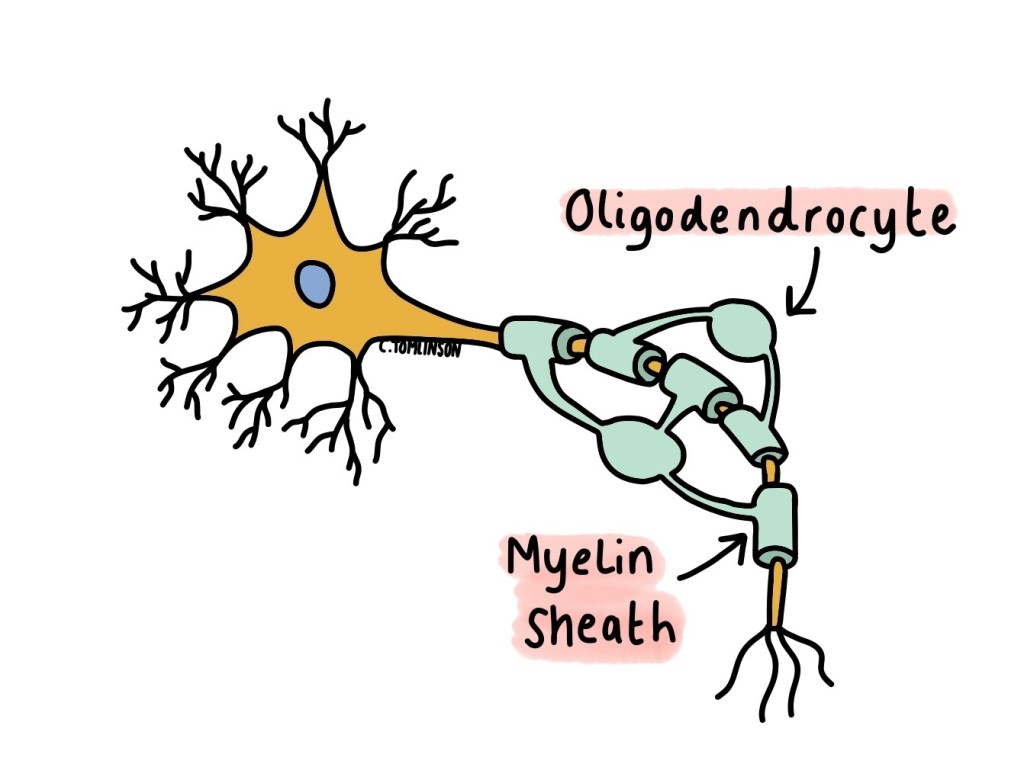
There are other glial cells found in the peripheral nervous system (i.e. nerves outside the brain and spinal cord), such as Schwann cells. However, glioblastomas occur exclusively within the central nervous system and therefore do not arise from these peripheral cells.
Because glioblastomas arise from this widely distributed glial cell population, they tend to infiltrate deeply into surrounding brain tissue rather than forming a single, discrete mass, which makes them more difficult to treat.
Treatment is further complicated by the blood-brain barrier, a highly selective protective system designed to prevent harmful substances in the bloodstream from entering the brain. While essential for neurological protection, makes it more difficult for many systemic therapies like chemotherapy to reach adequate concentrations within tumour tissue. Over time, the tumour itself can also develop resistance to treatment, limiting their effectiveness.
Crossing the blood-brain barrier and targeting tumour tissue
A recent pilot study has explored a particularly interesting concept: modifying vitamin B12 into a compound that can both cross the blood-brain barrier and selectively target glioblastoma tumours. The compound, known as nitrosylcobalamin (NO-Cbl), is a modified form of vitamin B12 designed to act as a carrier for nitric oxide, a molecule that can induce damage in cancer cells and trigger programmed cell death (apoptosis).
Vitamin B12 is naturally transported around the body and is one of the few nutrients that can reach the brain. Researchers have taken advantage of this built-in pathway by linking nitric oxide to B12, effectively using it as a delivery system to guide the compound into brain tumour tissue.
In animal models, NO-Cbl was shown to successfully cross the blood-brain barrier and accumulate preferentially within glioblastoma tissue (instead of healthy tissue). This selective accumulation is particularly relevant in a disease where precision delivery is one of the main barriers to effective treatment.
The study also explored how NO-Cbl might interact with existing therapies. When combined with standard glioblastoma treatment such as temozolomide, researchers observed a significantly stronger anti-tumour effect compared with either treatment alone. This suggests a potential role not as a standalone therapy, but as an adjunct that enhances the effectiveness of existing regimens.
Early stage research and limitations
It is important to emphasise that these findings are still at an early stage. This is a pilot study based on laboratory and animal models rather than human trials. As such, there are still significant unknowns around safety, dosing, and whether the same effects would be seen in humans.
Many promising cancer therapies show strong results in early experimental models, but not necessarily in human clinical trials, particularly in complex diseases like glioblastoma where tumour behaviour can vary widely.
Why this matters
Despite these limitations, the study reflects a broader direction in glioblastoma research. When outcomes have changed very little for decades, progress is increasingly being driven not only by the development of new drugs, but also by efforts to improve how treatments actually reach the brain.
So while the results of this study are still very early stage, it’s worth keeping an eye on where this line of research leads. If you’d like to read the full study, you can find it here.
I’d be really interested to hear your thoughts on this too:
- When you hear about early-stage studies like this, do you tend to feel hopeful, cautious, or somewhere in between?
- Do you think it’s useful for this kind of research to be shared publicly at an early stage, even if it’s still far from clinical use?
- Or do you think it risks creating expectations before we know if it will actually translate into patient benefit?
A note from the author:
As many of you know, The Health and Healing Narrative has always been a passion project, centred around improving communication and understanding between patients and practitioners, particularly within a primary care context.
I started this blog because I felt there was a need for more honest conversations in healthcare. In clinical practice, we often work within the constraints of short consultations and, although we do our best, there is rarely enough time to explore everything we would like to. From the other side, I know patients often feel the same. I wanted to create a space where those conversations could continue — where we could learn from one another, reflect, and ultimately improve understanding within healthcare.
I never imagined quite how many people would connect with that idea, especially after opening the blog to guest writers.
Recently, there has been some major restructuring behind the scenes, which meant putting parts of the blog on hold while everything was rethought and reshaped. It has been a little quieter than usual, but we’re now getting back on track and are genuinely excited about what’s ahead.
Thank you for your patience, your support, and your generosity throughout that time. Every article you read, every comment you leave, and every share on social media encourages me to keep going. It means more than you know.
Charlotte xx


Leave a Reply