
From around October 2026, babies born in England are expected to be routinely screened for spinal muscular atrophy (SMA) as part of the NHS newborn blood spot screening programme. While this may seem like a relatively small addition to an existing test, it represents a major milestone in paediatric medicine, as for babies born with SMA, identifying the condition before symptoms develop can dramatically alter the course of their lives.
What is Spinal Muscular Atrophy (SMA)?
Spinal muscular atrophy (SMA) is a rare inherited neuromuscular condition caused by changes (mutations) in the SMN1 gene. This gene is responsible for producing survival motor neurone (SMN) protein, which is essential for the health and function of motor neurones — specialised nerve cells in the spinal cord and brainstem that control voluntary muscle movement.
Without enough SMN protein, these motor neurones gradually degenerate, leading to progressive muscle weakness and wasting (atrophy). Depending on the severity, SMA can affect movement, swallowing and breathing.
SMA is inherited in an autosomal recessive pattern, meaning a child must inherit a faulty copy of the SMN1 gene from both parents to develop the condition. Parents who each carry one altered copy are usually healthy themselves but have a 25% chance of having a child with SMA, a 50% chance of having a child who is an unaffected carrier, and a 25% chance of having a child who neither has the condition nor carries the altered gene with each pregnancy.
The vast majority (around 95%) of cases are caused by changes on chromosome 5 and are known as 5q SMA. This is the form that can be detected through newborn screening and is traditionally classified into four main types based on the age symptoms first appear and the highest motor milestone achieved:
- Type 1 (Werdnig-Hoffmann disease):
- The most common severe form, presenting within the first six months of life with profound muscle weakness, feeding difficulties and breathing problems.
- Type 2:
- Usually presents between 6 and 18 months of age. Children can typically sit independently but do not usually walk unaided. Most will survive to adulthood.
- Type 3 (Kugelberg-Welander disease):
- Presents after 18 months of age or in adolescence. Most individuals learn to walk, although mobility may decline over time. Those affected have a normal life expectancy.
- Type 4:
- A rare adult-onset form that causes slowly progressive muscle weakness and is generally the mildest form.
Thanks to advances in treatment and earlier diagnosis, these traditional classifications are becoming less distinct, as many children who receive treatment before symptoms develop achieve milestones that would not previously have been expected for their SMA type
Why does early diagnosis matter?
One of the greatest challenges with SMA is that irreversible damage to motor neurones begins before symptoms become obvious. By the time muscle weakness is recognised, many of these nerve cells have already been permanently lost. Unlike many other conditions, this damage cannot be reversed, making early diagnosis critical.
Research has consistently shown that treatments produce the greatest benefit when given before symptoms develop. Babies treated in the pre-symptomatic stage are much more likely to achieve important developmental milestones, including sitting, standing and walking independently, compared with those who begin treatment after symptoms have appeared.
How will newborn screening work?
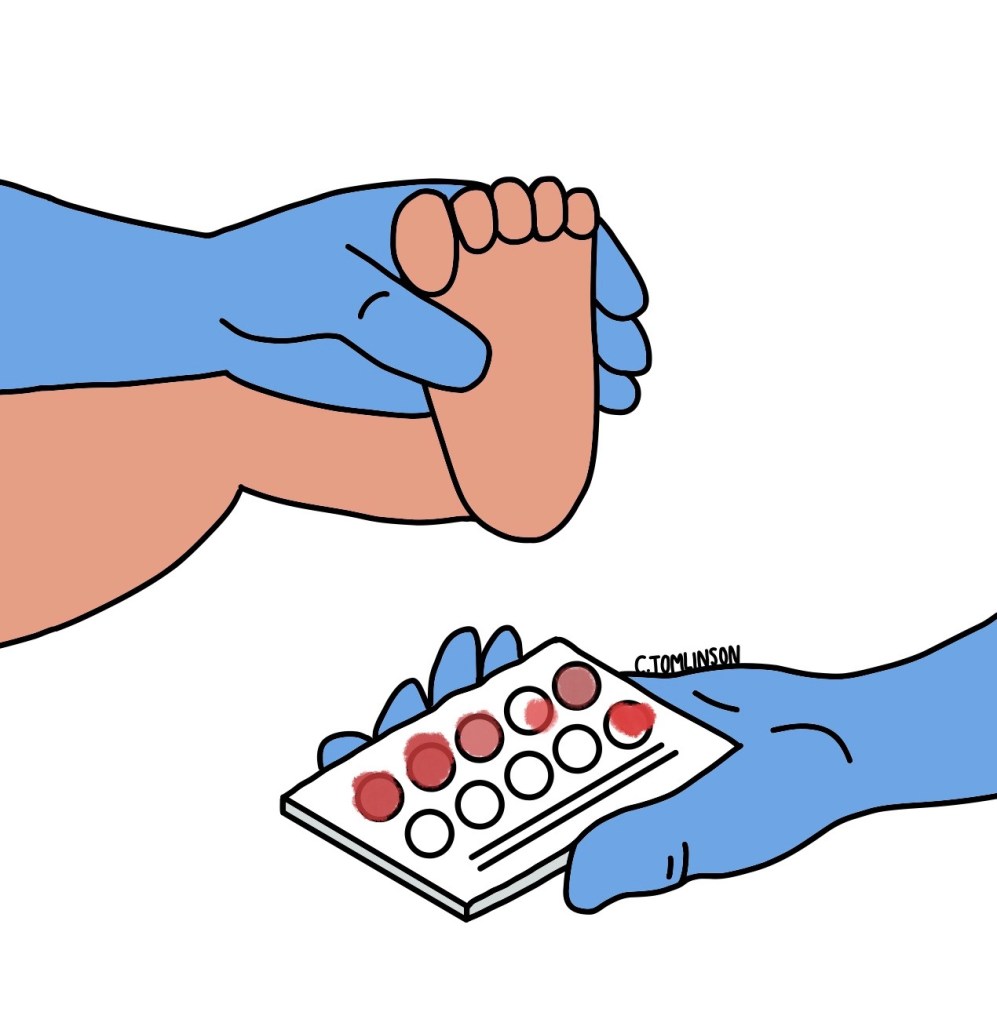
The new test will be incorporated into the existing newborn blood spot (heel-prick) screening programme, which is already offered to babies at around 5 days of age.
A few drops of blood are collected from the baby’s heel onto a special card and analysed for a number of rare but serious conditions. Adding SMA screening does not require an additional blood test — it allows the same sample to be analysed for another condition.
If screening suggests a baby may have SMA, further diagnostic testing is performed to confirm the diagnosis before treatment begins.
How has treatment transformed the outlook for SMA?
Until relatively recently, treatment for SMA was largely supportive, focusing on respiratory care, nutrition, physiotherapy and symptom management.
Today, the landscape has changed dramatically thanks to disease-modifying therapies that target the underlying genetic cause of the condition. Since 2019, these treatments have progressively become available on the NHS, transforming outcomes for many children with SMA.
These include:
- Nusinersen (Spinraza): An antisense oligonucleotide that increases production of functional SMN protein by modifying how the related SMN2 gene is processed.
- Risdiplam (Evrysdi): An oral medication that also increases production of functional SMN protein.
- Onasemnogene abeparvovec (Zolgensma): A one-time gene replacement therapy that delivers a working copy of the SMN1 gene to affected cells.
While these treatments are not a cure, they have transformed expectations for many children with SMA, particularly when treatment begins before symptoms appear. By identifying babies with SMA within days of birth, healthcare professionals can intervene before irreversible damage has occurred. This shifts the focus from reacting to disease and managing its consequences to preserving motor function and improving lifelong outcomes.
For families affected by SMA, those first few days of life could make all the difference. The introduction of newborn screening for SMA is therefore much more than the addition of another test to the newborn blood spot programme — it is a powerful example of how advances in genetics, screening and targeted therapies are working together to give children the best possible start in life.
I’d love to hear from you!
- Had you heard of spinal muscular atrophy before reading this article?
- Are there any other medical breakthroughs or advances you would like me to explore in a future Medical Marvel Monday?
Let me know in the comments below. 💙


Leave a Reply